
Review · ATHENS
Private Luxury Tour: Mystic Pilgrimage – Kerameikos to Eleusis
The most unusual part of this Athens excursion is the route itself. You follow the ancient Sacred Way from Kerameikos, the city’s old cemetery and ceremonial gateway, toward Eleusis, where the secretive Mysteries honored Demeter and Persephone. Along the way, modern roads, forgotten ruins, a Byzantine monastery, and old pilgrimage sites overlap in a way that gives you a broader view of Greece than a single famous monument can.
I like two things right away: the private vehicle keeps the day comfortable, and the route reaches places that are awkward to connect by public transport. I also like the personal style of drivers such as Pericles and Dimitris, whose storytelling is repeatedly praised for making mythology easier to follow. The main catch is important: this is a driver-guide service, not a licensed guide-led tour inside every monument, and entrance fees are extra.
Key points to know before booking
- Kerameikos gives the route a meaningful start: You begin among ancient tombs, city walls, the Dipylon Gate, and the place where the Sacred Way left Athens.
- The route includes more than ruins: You see fragments of the ancient road, Roman bridges, the Sanctuary of Aphrodite, and Daphni Monastery.
- Eleusis is the main event: The Great Propylaea, Kallichoron Well, Ploutonion, Telesterion, and museum explain the religious purpose of the pilgrimage.
- The driver-guide format matters: You receive historical explanations in the vehicle and at stops, but no licensed guide accompanies you inside the archaeological sites.
- The lunch stop is traditional but not included: You have about 45 minutes at a Greek taverna in Eleusis, with food paid separately.
- Comfort is a real benefit: Hotel or port pickup, air conditioning, bottled water, Wi-Fi, and a private car or minivan make the long route easier.
Why the Sacred Way is worth your time
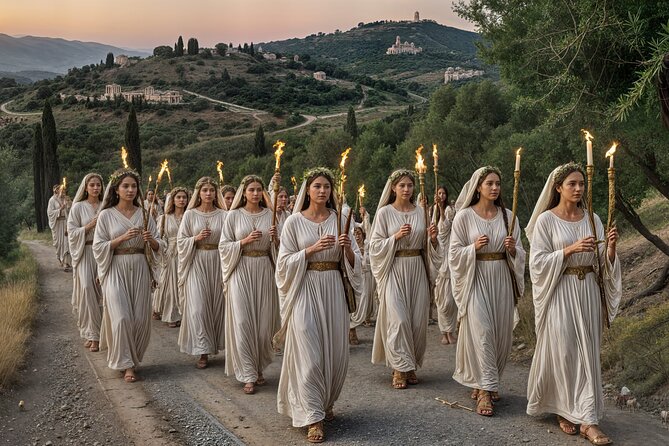
Athens is full of famous ancient sites, but the Sacred Way offers a different kind of history. It was the road used by pilgrims traveling from Athens to Eleusis for the Eleusinian Mysteries, religious ceremonies linked to Demeter, Persephone, the seasons, death, and renewal.
The route is not preserved as one continuous pedestrian trail. Instead, this experience connects archaeological remains scattered between the modern city and the coast. That is why private transport is useful. You can move from a cemetery to a bridge, from a road fragment to a monastery, without spending your day working out taxis and local connections.
I would book this mainly for the story that links the stops together. If you only want a polished monument with clear signage and a long guided visit, the format may feel thin. If you enjoy seeing how ancient sites fit into present-day Greece, the route has much more appeal.
The advertised duration is about five to six hours, including driving between locations. The stop descriptions add up to several hours on site, so the actual pace may feel brisk if every stop is included. Ask at booking how much time will be given to the main museums and Eleusis sanctuary.
More Private Luxury Tours in Athens
- Half Day Best Of Athens Highlights Luxury Private Tour 4Hou
★ 4.7 · 210 reviews - Private Luxury Biblical Tour: Apostle Paul in Athens & Corinth
★ 5.0 · 162 reviews - Athens AirPort To Athens Hotels Luxury Private Transfer Service
★ 4.5 · 161 reviews
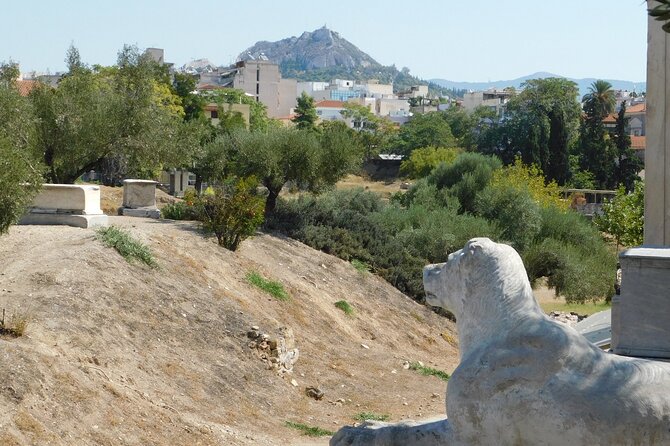
Starting in Kerameikos among tombs and city walls
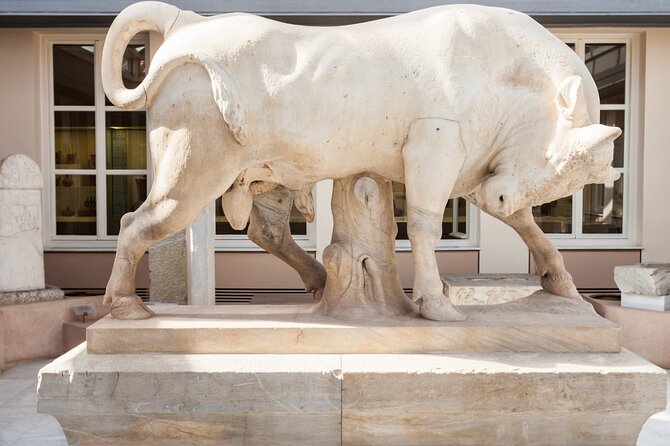
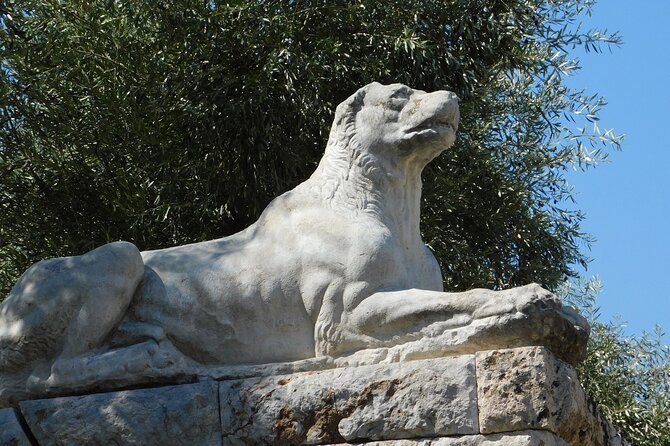
Kerameikos is an excellent place to begin. The site was once Athens’ potters’ quarter, but its most moving remains are the cemetery, funerary monuments, and defensive walls. You get a sense of how the living city and the world of the dead met at Athens’ edge.
The Sacred Way began here, and the ancient Panathenaic procession passed through this area on its way toward the Acropolis. The site is quieter than central Athens, which makes it easier to focus on the stone grave markers, carved reliefs, and fragments of the old walls.
You have about 30 minutes at the archaeological site, followed by short visits to the Dipylon Gate and Pompeion. That is enough for an introduction, but not enough for a slow archaeological study. If Kerameikos is a priority, tell your driver. The Pompeion, where ceremonial preparations for the Panathenaic procession took place, deserves an explanation because its remaining foundations are easy to miss.
The Kerameikos Museum adds another 30 minutes. Its pottery, funerary stelae, and grave goods help explain the site better than the stones alone. I would give the museum your attention rather than treating it as a quick shelter from the sun.
One practical point: the listed admission fees do not include Kerameikos or its museum. You should budget for those separately.
Following the road through modern Athens
After Kerameikos, the route becomes less like a single archaeological walk and more like a historical trail stitched through the city. At the remains of the ancient bridge near Eleonas Metro Station, you see three surviving piers from a crossing that once had at least five arches over the Kifisos River.
This is a short stop, only about 10 minutes, but it explains the practical side of the pilgrimage. Thousands of people needed to cross this river on their way to Eleusis. The Sacred Way was not only a religious route. It also carried trade, travelers, processions, and daily movement between Athens and the coast.
Another short stop in Aigaleo brings you to remaining sections of Iera Odos, the ancient road itself. Do not expect an uninterrupted Roman or classical highway. The value lies in understanding the route and imagining the procession moving westward with sacred objects, songs, and ritual duties.
The driver’s commentary matters most here. Without context, these fragments can look like isolated stones beside modern roads. With a clear explanation, they become part of a larger journey.
Daphni Monastery and the shift from pagan to Byzantine Greece
The Monastery of Daphni provides one of the strongest changes of mood. Built in the 11th century, it is a UNESCO World Heritage Site on the old Sacred Way. Its Byzantine mosaics, especially the image of Christ Pantocrator in the dome, bring a later religious tradition into the same corridor once used for the Eleusinian Mysteries.
You have about 30 minutes here. That is a sensible amount of time for the main architecture and mosaics, though anyone interested in Byzantine art may want longer. The surrounding cypress trees add a calm pause between the road stops and the larger archaeological area at Eleusis.
I like this inclusion because it prevents the tour from becoming a narrow lesson about classical Athens. The Sacred Way continued to matter after the ancient pagan rites faded. Daphni helps you see the route as a long-lived corridor of worship rather than a road belonging to only one period.
The information provided describes admission here as free, but opening conditions can change at heritage sites. Confirm access when booking, especially if this stop is essential to you.
More Private Luxury Tours in Greece
- Private Luxury Biblical Tour: Apostle Paul’s Footsteps – Corinth
★ 5.0 · 148 reviews - Athens Private Luxury Catamaran Cruise with Traditional Greek Meal and BBQ
★ 5.0 · 106 reviews - Private Luxury Tour: Athens Acropolis & Iconic City Highlights
★ 5.0 · 48 reviews - Private Luxury Tour: Unveiling the Sacred Mysteries of Eleusis
★ 5.0 · 45 reviews
The Sanctuary of Aphrodite and the Roman bridge
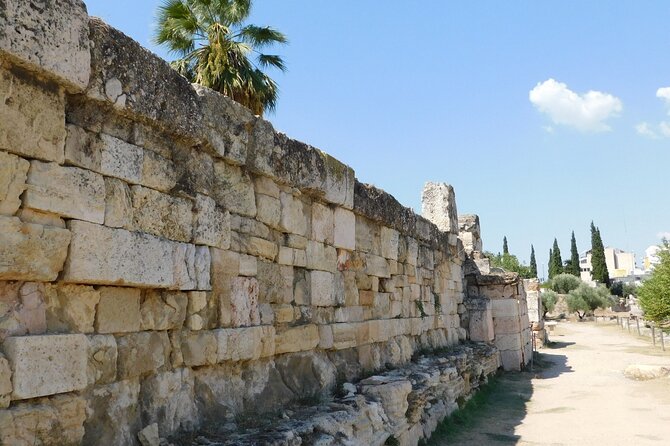
The Sanctuary of Aphrodite near Skaramagkas is a brief, quiet stop. The remains are limited, but the location mattered to ancient worshippers traveling toward Eleusis. On weekdays, the interior is not open, so the visit is from outside with time for photographs. On weekends, the sanctuary is open to the public.
That schedule makes this stop more valuable on a weekend than on a weekday. On a weekday, treat it as a roadside history lesson rather than a full site visit. The driver can explain its connection to the Sacred Way and the wider pattern of shrines that supported the pilgrimage.
Near Eleusis, you also stop at a Roman bridge built during the reign of Hadrian, around 125 CE. It is about 50 meters long and 5.30 meters wide, with four arches and sloping approaches. The bridge connected the Sacred Way with the Eleusinian Kephisos River and gives you a clear look at Roman engineering.
These stops are short, about 10 minutes each. They are best appreciated as parts of the route, not as major standalone attractions.
Entering Eleusis through the Great Propylaea
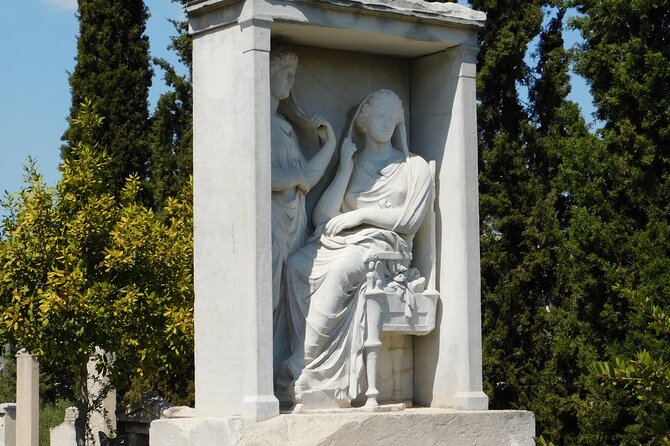
Eleusis is the reason to choose this excursion over a general Athens sightseeing drive. The sanctuary was one of the ancient Greek world’s most important religious centers. The ceremonies held here were restricted, so much of what happened inside the Mysteries remains unknown.
You can still understand the setting. The Great Propylaea formed the monumental entrance to the sanctuary of Demeter and Persephone. Built in the second century CE under Marcus Aurelius, it echoed the Propylaea on the Acropolis. Its role was both practical and symbolic: initiates passed from the ordinary world into a sacred precinct.
The archaeological site also includes the Kallichoron Well, the Ploutonion, and the Telesterion. Each place connects to the story of Demeter’s search for Persephone.
At the Kallichoron Well, tradition says Demeter rested while searching for her daughter. The name means well of the beautiful dances, recalling the women who were said to have danced there to comfort the grieving goddess.
The Ploutonion is associated with Hades, or Plouton, and the descent of Persephone into the Underworld. The cave is modest in physical size, but it carries a strong mythological charge. This is one of the places where a good explanation from Pericles, Periklis, or another assigned driver-guide can make a short stop memorable.
The Telesterion was the great hall where initiates took part in the central rites. You cannot reconstruct the ceremonies from the ruins, and that is part of the point. The missing details are not an accident of poor preservation. The rites were secret by design.
The listed time at the main Eleusis site is about 30 minutes, with another 10 minutes each for the Great Propylaea, Kallichoron Well, Ploutonion, and Telesterion. That schedule gives you an overview rather than a leisurely excavation visit. If Eleusis is your main goal, ask if the time can be adjusted there by shortening some of the smaller roadside stops.
The Eleusis Museum brings the stones to life
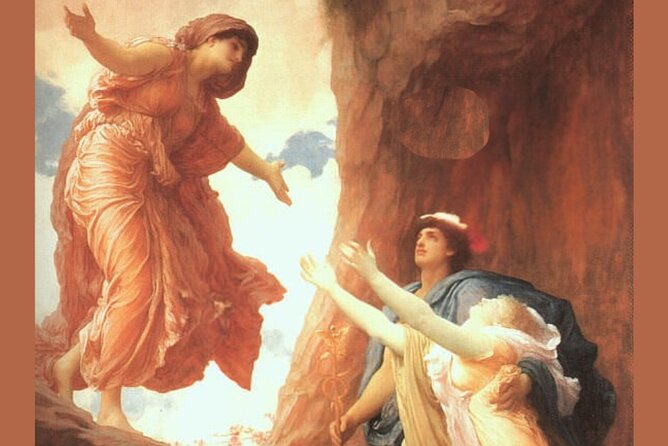
The Archaeological Museum of Eleusis is one of the most useful parts of the day. Statues of Demeter and Persephone, sacred offerings, reliefs, and other finds help you connect the sanctuary’s bare walls with the people who worshipped here.
I would not rush this museum. The sanctuary can leave you with questions about what the rituals looked like, and the objects provide some answers about art, worship, and daily life. The museum is especially valuable if your driver explains the myths in the vehicle but cannot accompany you inside as a licensed guide.
You have about 30 minutes listed for the museum. That is workable for the main objects, though the tour’s many stops mean you should keep an eye on the clock. Tickets are not included.
This is also where the tour’s guide arrangement becomes most important. The driver-guide provides commentary and printed material may be available, but the service does not include an official archaeological-site guide. You will enter the site and museum on your own unless you arrange a licensed guide separately.
Lunch in Eleusis, with the bill paid separately
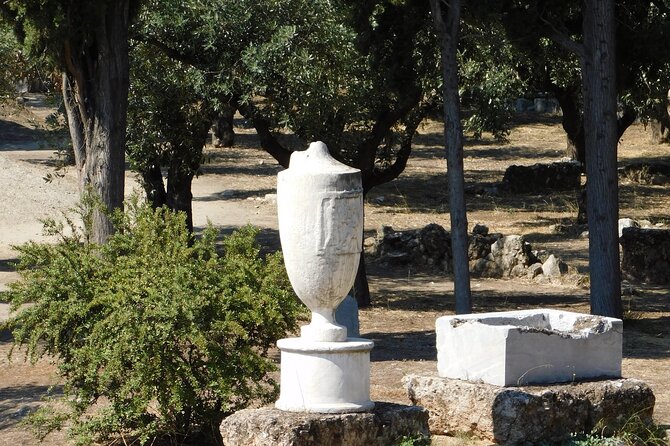
The final stop is a 45-minute meal at a traditional Greek taverna in Eleusis. The menu may include grilled meat, salads, tzatziki, eggplant salad, and other familiar Greek dishes, but the meal cost is not part of the tour price.
Forty-five minutes is enough for a practical lunch, not a long Greek feast. That is fine after several short archaeological stops. It also gives you a chance to sit down before returning to Athens.
I like having lunch in Eleusis rather than heading straight back. The town is not treated only as an ancient ruin site. You get a small connection to present-day local life, though the quality and exact menu are not specified in advance.
Vehicle comfort, group size, and the real value of $129
The listed price is $129, but you need to calculate the full cost. Add admission fees for Kerameikos, the Eleusis archaeological site, and the museums, plus lunch and any gratuity. The price also does not include a licensed guide inside the sites.
For one or two people, the private vehicle, pickup, and door-to-door route can make the price reasonable compared with arranging separate taxis. For a group of four, the value improves because the transport cost is shared. Groups of one to four use a luxury sedan, while groups of five to seven use a minivan.
You receive air conditioning, bottled water, Wi-Fi, and private transport. That matters in warm weather, especially because the route includes outdoor ruins with limited shade. Pickup is available from your Athens hotel or port. Airport pickup costs extra.
The main question is what kind of guiding you need. If you want a driver who gives context, handles the road, and keeps the day moving, this format fits. If you want detailed lectures and guided interpretation inside every monument, the extra cost of a licensed guide may be worthwhile.
The service has a 4.9 rating from 20 reviews and a 95 percent recommendation rate. The most consistent praise centers on the personal approach, clear storytelling, and care shown by drivers such as Pericles and Dimitris. One important criticism is that the experience can feel closer to private transport with basic explanations than to a full guided tour. I would take that criticism seriously and clarify expectations before paying.
Wear sturdy, comfortable shoes. Bring a hat and sunscreen. You will walk over uneven archaeological ground, and the day can be hot.
Who should book this Sacred Way tour?
I would choose this tour if you have already seen central Athens and want a half-day focused on ancient religion, mythology, and places beyond the usual Acropolis circuit. It suits couples, families, and small groups who value privacy and do not want to manage several separate taxi rides.
It is also a good choice if you are arriving by cruise ship and want pickup from the port. The private format lets your group set the pace within the limits of the five to six-hour schedule.
I would hesitate if your main aim is a slow, expert-led archaeological study. The many stops are short, tickets cost extra, and the driver does not serve as a licensed guide inside the sites. A full-day Eleusis visit with a specialist guide would better suit that purpose.
The tour requires good weather. You can cancel for a full refund up to 24 hours before the start time. Cancellations or changes inside 24 hours are not refunded or accepted, except when poor weather causes the operator to cancel.
Should you book it?
Book it if you want the complete route from Kerameikos to Eleusis, not just a visit to one sanctuary. The private car, hotel or port pickup, bottled water, and flexible group format solve the practical problems of reaching the Sacred Way’s scattered remains.
Before booking, ask two questions: how much time will be reserved for the Eleusis sanctuary and museum, and who will drive your group that day. If you understand that the service combines transport with historical commentary rather than full licensed guiding, $129 can be a useful way to reach a difficult-to-organize set of sites. If you expect a guide beside you at every ruin, plan for an additional guide or choose another format.
FAQ
How long does the Mystic Pilgrimage tour last?
The tour takes approximately five to six hours, including travel between the locations.
Where can pickup take place?
Pickup and drop-off are available from your Athens hotel or the Athens port. Airport pickup is available for an additional cost.
Is this a private tour?
Yes. Only your group participates in the activity.
What type of vehicle is used?
Groups of one to four people travel in a luxury sedan. Groups of five to seven use a comfortable minivan.
Are entrance fees included?
No. Entrance fees for archaeological sites and museums are paid separately.
Is a licensed guide included inside the archaeological sites?
No. The service includes an English-speaking driver-guide with historical knowledge, but not a licensed guide accompanying you inside the sites.
Is lunch included?
No. A lunch stop at a traditional taverna in Eleusis is scheduled, but you pay for your own meal.
Is the Sanctuary of Aphrodite open every day?
The sanctuary is open to the public on weekends. On weekdays, the stop is outside the site, with time for photographs.
What should I bring?
Wear comfortable footwear and bring a hat and sunscreen. Bottled water is provided, and the vehicle has air conditioning.
Can I cancel for a full refund?
You can cancel at least 24 hours before the local start time for a full refund. Cancellations or changes made less than 24 hours before the start time are not accepted and are not refunded. If poor weather causes the tour to be canceled, you will be offered another date or a full refund.
Recently added around Athens
- Visit Delphi & Meteora Monasteries Luxury Private Tour FromAthens★ 5.0 · 9 reviews
- Discover Lefkes: Traditional Greek Village Paros VIP Experience★ 4.0 · 5 reviews
- VIP Private Guided Tour of Athens Acropolis & Plaka in a Sidecar★ 5.0 · 108 reviews
- Private Luxury wine tour in Ancient Nemea and vineyards.★ 5.0 · 7 reviews
- VIP – Day Cruise From Athens to Hydra Poros Aegina★ 4.5 · 28 reviews
- Private Athens Transfer Airport/Port -Greek Tours-Hourly service★ 5.0 · 88 reviews
- Private Luxury Powerboat Day Tour in Athens★ 5.0 · 36 reviews
- Private Luxury Transfer from Athens to Athens Airport★ 5.0 · 25 reviews
Private Luxury Tours, compared.

Arrival Transfer: Private Luxury 8 Passenger Limousine Service
Read our review →
Dubai 3 Hour Private Luxury Yacht Charter with Jet Ski Option
Read our review →
VIP Jazz Dinner Cruise with Private Tour and Open Bar Option
Read our review →
Four-Day Private Luxury Golden Triangle Tour to Agra and Jaipur From New Delhi
Read our review →

Browse the lists this tour appears in