
Review · ATHENS
Private Luxury Tour: Unveiling the Sacred Mysteries of Eleusis
The most unusual part of this private tour is that Eleusis begins long before you reach the main ruins. You follow pieces of the ancient Sacred Way, the road used by pilgrims walking from Athens to the sanctuary of Demeter and Persephone. Bridges, river crossings, a Byzantine monastery, and roadside remains help you understand the journey as a whole.
I like the easy private transport and the chance to ask questions as you go. I also like the way the route links mythology with real places, from the Kallichoron Well to the cave associated with Hades. The main drawback is that the driver-guide does not accompany you as a licensed guide inside the archaeological sites, so the quality of your understanding depends on the explanations given along the road and your own reading at Eleusis.
Key points before you book
- Follow the ancient Sacred Way: See surviving parts of the route that connected Athens with Eleusis and carried religious processions.
- Meet the story on the road: Demetrios and Pericles are named guides praised for kind, clear explanations and a relaxed pace.
- Ride in private comfort: Groups of one to four use a luxury sedan, while groups of five to seven travel by minivan.
- Add Daphni Monastery: The 11th-century Byzantine church offers a welcome change from ancient ruins, with famous mosaics.
- Allow for site fees: The archaeological site and museum are not included, with admission listed at €10 per person.
- Expect a half-day outing: The experience lasts about four to five hours, including time spent driving between stops.
Why Eleusis begins on the road from Athens
Eleusis was not an isolated temple reached by modern highway. In antiquity, pilgrims made their way from Athens along the Iera Odos, or Sacred Way, for the Eleusinian Mysteries. These ceremonies honored Demeter and Persephone and were among the most important religious rites in the Greek world.
The tour makes this journey its central idea. Instead of driving straight to the archaeological site, you stop at fragments of the old route. This gives you a better sense of distance, movement, and ritual. The experience is less about ticking off one famous ruin and more about seeing how a sacred journey unfolded.
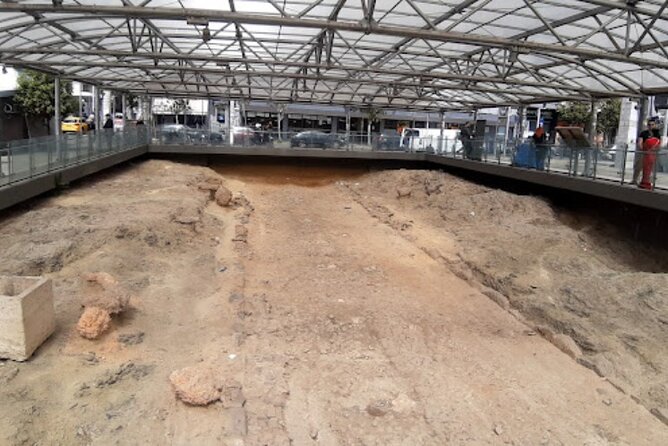
The first stop is near the modern Eleonas Metro Station, where archaeologists found remains of a bridge over the Kifisos River. Three surviving piers suggest a bridge with at least five arches. You spend only about 10 minutes here, but the stop helps explain why river crossings mattered to both daily travel and religious processions.
A second section of the Iera Odos appears in the Aigaleo area. Again, the visit is brief, about 10 minutes, and admission is free. You walk along surviving traces of the road and hear how pilgrims carried sacred objects, sang hymns, and moved toward Eleusis.
Do not expect a long, untouched ancient road. These remains sit among the modern city. That is part of the point. You see how old religious routes can survive in small pieces inside a living urban area.
More Private Luxury Tours in Athens
- Half Day Best Of Athens Highlights Luxury Private Tour 4Hou
★ 4.7 · 210 reviews - Private Luxury Biblical Tour: Apostle Paul in Athens & Corinth
★ 5.0 · 162 reviews - Athens AirPort To Athens Hotels Luxury Private Transfer Service
★ 4.5 · 161 reviews
Daphni Monastery adds a Byzantine pause
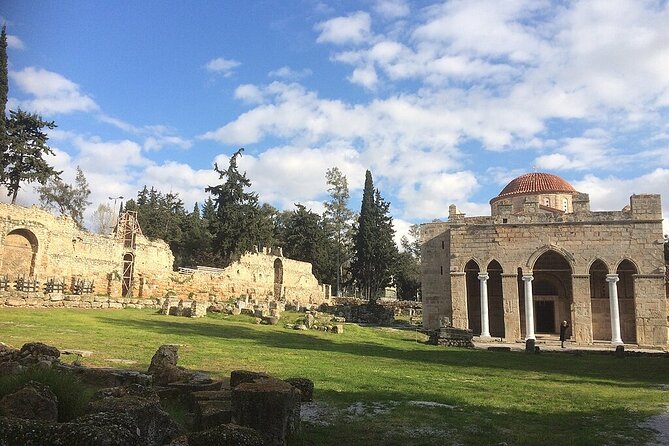
The Monastery of Daphni is one of the strongest stops before Eleusis. It was built in the 11th century along the Sacred Way and is recognized as a UNESCO World Heritage Site. The tour allows about 30 minutes here.
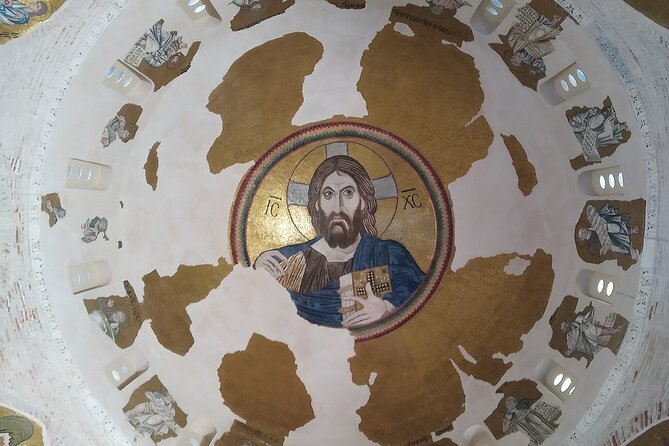
The monastery changes the rhythm of the day. After ancient roads and bridge remains, you enter a Byzantine setting with cypress trees, stone walls, and celebrated mosaics. The image of Christ Pantocrator in the dome is the major artistic highlight.
I like this stop because it broadens the story. The route from Athens to Eleusis was used across many centuries, not only during the age of the Mysteries. Daphni shows the later Christian chapter of this same corridor.
The schedule gives you enough time to appreciate the church, but not enough for a slow, detailed art-history visit. If Byzantine art is a major interest, you may wish you had longer. For most people, though, 30 minutes provides a useful change of pace without taking over the tour.
A short stop at the Sanctuary of Aphrodite
Near Skaramagkas, the remains of a sanctuary devoted to Aphrodite offer another glimpse of ancient worship along the route. The setting is quieter than the city stops, and the remains are limited, so the value comes from the connection to the wider religious world around Eleusis.
Access depends on the day. The sanctuary is open to the public on weekends. On weekdays, you cannot enter the interior, but the driver makes a short outside stop for photographs and views of the site.
This is an important detail to confirm when planning. A weekend visit gives you more direct access. A weekday visit is still useful as a roadside explanation, but you should not expect a full archaeological walk.
Roman engineering at the Eleusis bridge
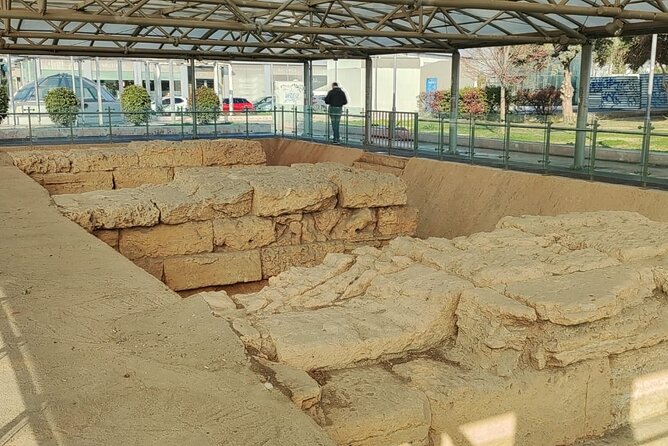
Before reaching the main sanctuary, you stop at a Roman bridge about one kilometer east of the Sanctuary of Demeter. Built during Emperor Hadrian’s reign in 125 CE, the bridge is about 50 meters long and 5.30 meters wide.
Its central section has four arches. The two middle arches are wider, while the outer arches are narrower, with sloping approaches on each side. Piraeus limestone gives the structure a solid, practical appearance.
The stop lasts about 10 minutes and admission is free. It is brief, but it gives you a clear example of how Roman engineering supported the older Sacred Way. The road was not only a ceremonial path. It also had to carry people, goods, and official traffic across the Kifisos River.
If you enjoy ancient construction, this may be more rewarding than the short visit suggests. It is easy to look at a ruined temple and focus only on religion. The bridge reminds you that sacred places depended on roads, water crossings, and careful public works.
More Private Luxury Tours in Greece
- Private Luxury Biblical Tour: Apostle Paul’s Footsteps – Corinth
★ 5.0 · 148 reviews - Athens Private Luxury Catamaran Cruise with Traditional Greek Meal and BBQ
★ 5.0 · 106 reviews - Private Luxury Tour: Athens Acropolis & Iconic City Highlights
★ 5.0 · 48 reviews - Mycenae Epidaurus Nafplio Isthmus Canal Private Luxury Tour
★ 5.0 · 43 reviews
Entering the archaeological site of Eleusis
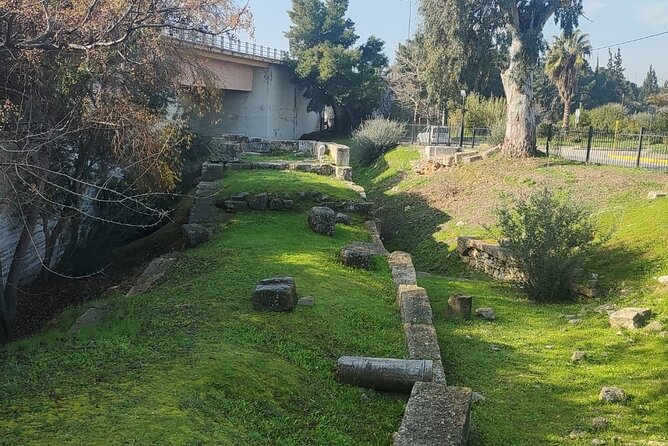
The main archaeological site is the heart of the outing. You receive about 30 minutes for the site and museum area, followed by shorter visits to specific features. The total time is enough for an introduction, but it is not a full-day study visit.
Eleusis was the center of the Mysteries of Demeter and Persephone. The rituals were secret, so no modern visitor can recreate the ancient ceremony. What you can see are the spaces that shaped it: entrances, walls, platforms, sacred areas, and the remains of buildings used by initiates.
The setting also helps. The site includes views toward the Saronic Gulf and the surrounding hills. These views connect the sanctuary to the wider region and make it easier to picture Eleusis as a destination beyond Athens.
The main admission fee is not included. The tour information lists the archaeological site and museum entrance at €10 per person. Because the driver-guide is not a licensed guide inside the archaeological sites, pay close attention to the explanation before entering and consider bringing your own guidebook or notes if ancient religion is a major interest.
The Telesterion and the heart of the Mysteries
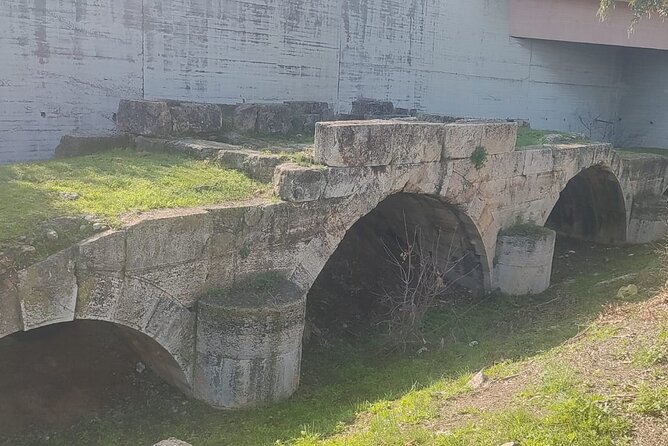
The Telesterion was the great hall where initiates took part in the central ceremonies. It was the main building of the Eleusinian cult, surrounded by sacred walls and precincts.
Today, you see foundations and structural remains rather than an intact hall. Even so, the scale and location help you understand its role. This was not a small shrine for private prayer. It was a large ritual space built for an important religious gathering.
The stop is listed at about 10 minutes. That is enough to identify the building and hear its purpose, but the site rewards a slower look. If you want to study the plan, compare rebuilding phases, or think through how thousands of people might have used the sanctuary, you will need to use your own time carefully.
The Telesterion is also where the limits of the tour become clear. The driver can prepare you with background, as Demetrios did for one group, but you do not receive a licensed guide’s detailed commentary inside the site.
The Great Propylaea and the threshold to the sacred area
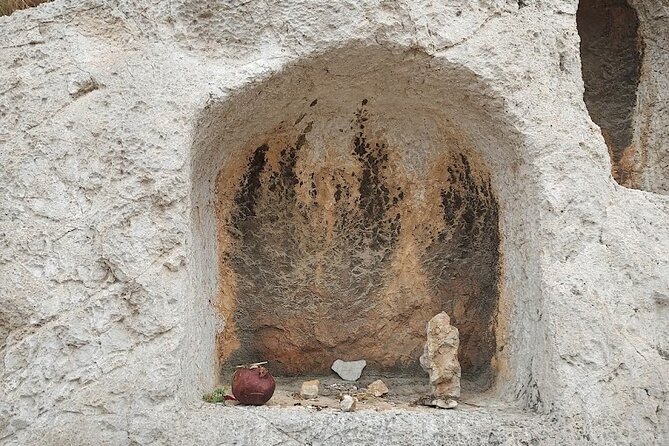
The Great Propylaea was the monumental entrance to the sanctuary. Built in the second century CE under Marcus Aurelius, it echoed the Propylaea of the Acropolis.
Its Doric columns and heavy stonework marked a transition. Pilgrims were moving from ordinary life into a protected religious precinct. The gateway’s design made that change visible and impressive.
You spend about 10 minutes here. I find this stop especially useful for understanding the emotional power of ancient architecture. Even in ruins, a large formal entrance tells you that the sanctuary was important, controlled, and carefully planned.
The remains are not as complete as the Acropolis Propylaea, so keep your expectations realistic. You are reading the shape of a vanished gateway from its surviving pieces.
The Kallichoron Well and the story of Demeter
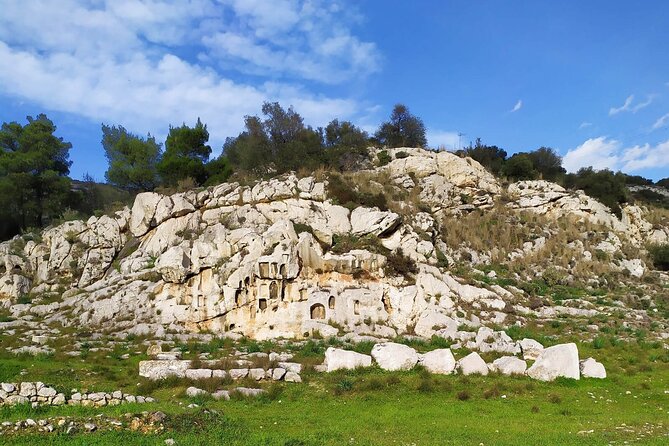
The Kallichoron Well is one of the most mythically charged places at Eleusis. Its name means well of the beautiful dances. According to ancient tradition, Demeter rested here while searching for Persephone after her abduction by Hades.
The story gives the well a human scale. Instead of focusing only on rulers, temples, and grand construction, you pause at a place connected with grief, waiting, and comfort. Local women were said to have danced here to console the goddess.
The stop lasts about 10 minutes and admission is included with the archaeological site ticket. The well itself is not a grand monument, so the explanation matters. Listen for how the myth connects to the Eleusinian themes of loss, return, renewal, and the cycle of life.
The Ploutonion and the entrance to the Underworld
The Ploutonion is a rocky cave associated with Plouton, another name for Hades. Ancient tradition linked this place with the entrance to the Underworld and with Persephone’s descent.
You do not enter an elaborate underground attraction. Instead, you see a natural rocky feature within the sanctuary and learn how it fit into the religious story. The stop takes about 10 minutes.
For many people, this is one of the most memorable parts of Eleusis because the myth seems tied directly to the ground beneath your feet. It also helps explain why the Mysteries focused so strongly on death and rebirth. The site does not reveal the secret rites, but it shows the physical places that gave the stories force.
The Eleusis museum completes the picture
The Archaeological Museum of Eleusis is located within the ancient site and adds detail that the ruins cannot provide. Exhibits include statues of Demeter and Persephone, sacred offerings, and reliefs linked to the Mysteries.
The museum visit is scheduled for about 30 minutes. That is enough to see the main pieces, but not enough for an unhurried examination of every display. If you like sculpture and ancient religious art, keep an eye on the clock so you do not spend all your time in the first room.
The museum is especially helpful after seeing the Telesterion, Propylaea, well, and Ploutonion. Objects in glass cases can seem remote on their own. After walking through the sanctuary, you have a better idea of where they belonged and why they mattered.
What the private vehicle adds
Pickup and drop-off are available at hotels, apartments, and selected ports. At a hotel or apartment, the driver waits outside. At a port, the driver meets you in the arrival area with a sign showing your name. Airport pickup is possible for an added charge.
Groups of one to four use a luxury sedan. Groups of five to seven use a minivan. Every vehicle has air-conditioning, Wi-Fi, private transport, and bottled water. Those details matter in warm Greek weather, especially since the tour includes several outdoor stops and walking on uneven archaeological ground.
The driver is an English-speaking guide with historical knowledge, but not a licensed guide who enters the sites with you. The best use of this format is to ask questions during the drives and use the site time for your own exploration.
The drivers named in the supplied information are Demetrios and Pericles. Demetrios was praised for making many stops and preparing the group before Eleusis. Pericles was described as kind and well informed, especially on the Sacred Way and the Daphni church. Driver quality matters here because much of the experience depends on the stories told between stops.
Is $192.23 per person good value?
At $192.23 per person, this is not a budget excursion. It becomes more reasonable when you are traveling as a small private group and want pickup, a private vehicle, air-conditioning, Wi-Fi, and a route that public transport would make difficult to piece together.
The price does not include the archaeological site and museum admission, listed at €10 per person. It also does not include tips, and airport pickup costs extra. Ask about the final cost for your group before booking.
The value is strongest for people who care about the journey from Athens to Eleusis, not just the final ruins. If you only want to see the main archaeological site, a simpler visit may be more economical. If you want context, private transport, and stops along the ancient route, the added cost buys convenience and a more connected experience.
Who should book this Eleusis tour?
I would recommend it to first-time visitors who have already seen Athens’ main classical monuments and want a different side of Greek history. It also suits anyone interested in Demeter, Persephone, ancient religion, mythology, or the relationship between roads and sacred places.
Families and small groups may appreciate the private format. You can travel at your own pace within the planned schedule, ask questions without sharing the vehicle, and avoid organizing several separate transfers.
The tour is less suitable if you want a slow archaeological study, extensive time in the museum, or a licensed guide inside every monument. It is also not ideal for anyone who dislikes short stops and vehicle travel between sites. Wear comfortable shoes, bring a hat and sunscreen, and expect warm, sunny conditions.
Free cancellation is available up to 24 hours before the start time. Changes made within 24 hours are not accepted, and poor weather can lead to a new date or full refund.
Final verdict: a thoughtful route for the curious
Book this tour if you want Eleusis to feel like a complete journey rather than a single archaeological stop. The ancient bridge remains, Daphni Monastery, Aphrodite sanctuary, Roman bridge, and sanctuary ruins create a useful chain of places.
I especially like the preparation before the final site. The route gives the Telesterion and the stories of Demeter and Persephone more meaning. Choose it for the private transport and the historical connections, and go in knowing that the site visits are brief and that entrance fees and a licensed in-site guide are separate.
FAQ
How long does the private Eleusis tour last?
The experience lasts approximately four to five hours, including the driving time between locations.
Is pickup included?
Hotel, apartment, and selected port pickup and drop-off are included. Airport pickup is available at an additional cost.
What type of vehicle is used?
Groups of one to four people travel in a luxury sedan. Groups of five to seven use a minivan.
Is the tour private?
Yes. Only your group participates in the activity.
Is the tour offered in English?
Yes. The driver-guide speaks English.
Are entrance fees included?
No. Admission to the archaeological site and museum is not included. The listed cost is €10 per person.
Does a licensed guide enter the archaeological sites?
No. A licensed guide to accompany you inside the archaeological sites is not included. The English-speaking driver-guide provides historical explanations during the route.
Is the Sanctuary of Aphrodite open every day?
The sanctuary is open to the public on weekends. On weekdays, the tour makes a short outside stop for photographs and views.
What should I bring?
Wear comfortable footwear and bring a hat and sunscreen. Bottled water, air-conditioning, and Wi-Fi are provided in the vehicle.
Recently added around Athens
- Visit Delphi & Meteora Monasteries Luxury Private Tour FromAthens★ 5.0 · 9 reviews
- Discover Lefkes: Traditional Greek Village Paros VIP Experience★ 4.0 · 5 reviews
- VIP Private Guided Tour of Athens Acropolis & Plaka in a Sidecar★ 5.0 · 108 reviews
- Private Luxury wine tour in Ancient Nemea and vineyards.★ 5.0 · 7 reviews
- VIP – Day Cruise From Athens to Hydra Poros Aegina★ 4.5 · 28 reviews
- Private Athens Transfer Airport/Port -Greek Tours-Hourly service★ 5.0 · 88 reviews
- Private Luxury Powerboat Day Tour in Athens★ 5.0 · 36 reviews
- Private Luxury Transfer from Athens to Athens Airport★ 5.0 · 25 reviews
Private Luxury Tours, compared.

Arrival Transfer: Private Luxury 8 Passenger Limousine Service
Read our review →
Dubai 3 Hour Private Luxury Yacht Charter with Jet Ski Option
Read our review →
VIP Jazz Dinner Cruise with Private Tour and Open Bar Option
Read our review →
Four-Day Private Luxury Golden Triangle Tour to Agra and Jaipur From New Delhi
Read our review →


Browse the lists this tour appears in