
Review · TOKYO
Tokyo:Luxury Sumo Show Experience & Japanese cuisine & Drink
The most entertaining part of this two-hour Asakusa experience is the friendly sumo challenge. You watch retired wrestlers demonstrate the sport, then brave audience members can step into the ring and try their luck. The show also begins with a graceful geisha dance, giving the evening more range than a wrestling performance alone.
I like the clear bilingual commentary, which makes the rules, rituals, and comic moments easy to follow. I also like the meal built into the event, especially the A5 wagyu sukiyaki, chanko hot pot, and matcha dessert. The main consideration is that this is a polished entertainment show, not a visit to an active sumo stable, and the $103 starting price may feel high if you do not value the meal, drinks, photos, and audience participation.
Key points
- Geisha dance first: The evening opens with a traditional Japanese dance and a photo opportunity.
- Real ring in the restaurant: Sumo demonstrations and bouts happen close to your table or sofa.
- Dinner is part of the show: Standard seating includes sukiyaki, chanko hot pot, matcha dessert, and one drink.
- Audience members can wrestle: Sumo challenge places are limited and may be decided by lottery.
- Three comfort levels: Table seats, sofa seats, and front-row sofa seats offer different food, drink, and souvenir packages.
- Best for families: Children can watch, ask questions, join activities, and enjoy the show’s good-natured humor.
A sumo evening with more than wrestling
Sumo can look mysterious if you have never followed it. The ring, salt, ceremony, costumes, and short bursts of force all carry meaning, but you may not know what you are seeing. This show gives you the basic tools first, then lets you enjoy the action.
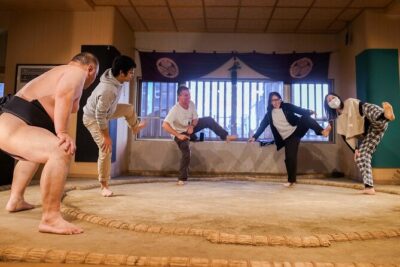
The Asakusa Sumo Club Annex is the smaller, more private branch of the popular Asakusa Sumo Club. It is set along Asakusa Kokusai Street, next to Matsuya Restaurant. The room has a real sumo ring at its center, with dining seats arranged around it.
The setting is designed to feel comfortable rather than formal. Families, couples, solo visitors, and mixed-age groups can all fit into the evening. You may be seated with other people, so do not expect a private dining room. That shared arrangement is part of the social feel, though it matters if you prefer a quiet meal.
The show runs for about two hours. That is long enough to include food, explanations, demonstrations, bouts, questions, and photos without turning into a full evening commitment. An evening time slot also works well with a walk around Asakusa before or after the performance.
More shows and performances in Japan:
- High Red Dunes with Camel Ride, Sandboarding, Falcon Show and VIP BBQ Dinner
★ 5.0 · 1,453 reviews - Sunset Camel Trekking with Falcon Show & VIP BBQ Dinner
★ 5.0 · 466 reviews - Marrakech: Camels & Quads on Sunset and Luxury Dinner with Show
★ 5.0 · 358 reviews
The opening: geisha dance and a first look at Japanese tradition
The evening starts with a geisha dance. It is a calm, graceful change of pace before the louder, more physical sumo segment. The small movements and careful gestures give you a glimpse of a performance tradition that can be hard to encounter in a simple sightseeing visit.
After the dance, you can take a photo with the geisha. This is especially appealing for families and first-time visitors who want a keepsake from the evening. The dance is an added cultural element, not a replacement for the sumo program, so the focus soon shifts to the ring.
The show then introduces the history, rules, rituals, and customs of sumo. The live commentary is given in English and Japanese. This is one of the strongest parts of the experience because the demonstrations make the explanations easier to understand than a written description alone.
The hosts keep the tone light. The MC helps the audience follow what is happening, invites questions, and brings people into the action. Some sessions have featured hosts named Luke or Go, both praised for making the program easy to follow and fun. The precise host may vary, but you can expect an active presenter rather than a silent announcer.
What happens in the sumo ring
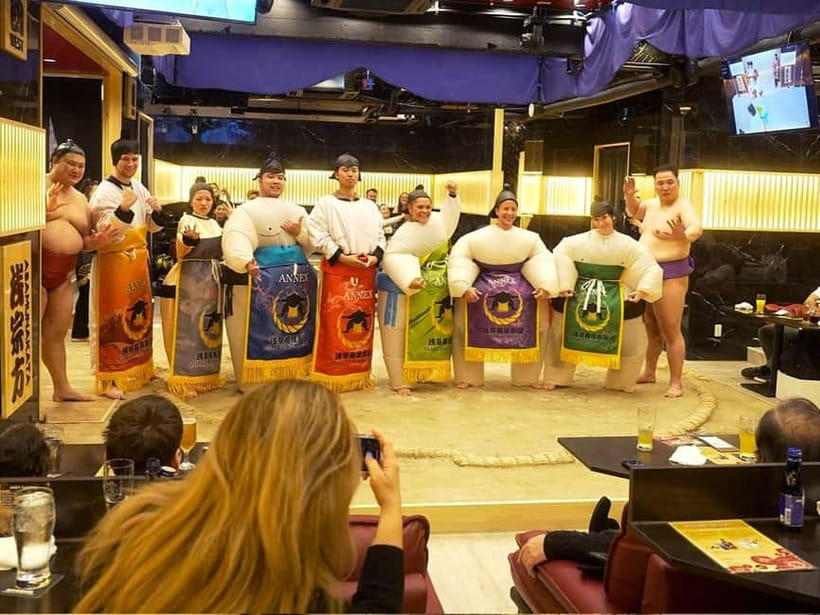
The ring is not just decoration. It is the stage for demonstrations of training techniques, movement, balance, and sumo strategy. You see the wrestlers close enough to appreciate their size and speed, while the commentary explains why they move and respond as they do.
The bouts are performed by retired sumo wrestlers. They bring genuine experience and physical presence, but the program is made for entertainment. The matches include humor and audience interaction, so this is not presented as a formal tournament or serious professional competition.
That distinction is important. If you want to watch current wrestlers train before sunrise in the strict setting of an active stable, choose a different activity. Here, you get a more accessible introduction, with explanations, jokes, photos, and chances to participate.
The show works well for people who know little about sumo. It also gives experienced fans something to enjoy through the close viewing position and the chance to ask questions. You will not need to understand Japanese to follow the action, since the commentary is bilingual.
The sumo challenge: fun, but not guaranteed
The audience participation is the part many families remember most. Brave volunteers can enter the ring and test themselves against a sumo wrestler in a friendly challenge. It is not presented as a serious contest. The point is to feel the scale and force of the sport while giving everyone else a laugh.
Children can take part in suitable moments, and teenagers have also enjoyed the chance to wrestle. You should be ready for the possibility that your child or companion becomes the center of attention. The staff help keep the mood welcoming, and photos and video are encouraged during the activity.
There is one important limit: the number of challengers is restricted for each performance. If too many people want to participate, the final names are chosen by lottery. Buying a ticket does not guarantee a place in the ring.
I recommend deciding in advance whether you truly want to volunteer. If you do, tell the staff or respond when participation is invited. If you would rather watch, the show still gives you plenty of interaction through questions, demonstrations, and photo opportunities.
More luxury tours in Japan:
- Kyoto: Private Highlights Tour with Guide and Luxury Vehicle
★ 4.6 · 316 reviews - From Tokyo: Mt Fuji Private Day Tour In Luxury Land Cruiser
★ 4.9 · 168 reviews - Luxury van Ride to famous car meet up spot Daikoku
★ 4.5 · 148 reviews - Haneda Airport Private Transfer – Luxury Car & Meet & Greet
★ 4.5 · 68 reviews
Dinner in the middle of the performance
The meal is a major part of the value. Standard seating includes a sukiyaki meal with Japanese A5 wagyu beef, chanko hot pot, matcha dessert, and one complimentary drink. Sukiyaki gives you a rich, savory main course, while chanko is the hearty hot pot associated with sumo wrestlers.
The meal is served while the show is underway, so this is dinner theater rather than a quiet restaurant meal. You may be watching a bout, listening to an explanation, or taking part in a question-and-answer moment while eating. The arrangement keeps the two-hour program moving, but it also means food may not always be served at the exact pace you prefer.
The food has generally been a strong part of the evening, with the meal described as generous, well presented, and tasty. One useful caution is that a portion of the food may not arrive as hot as some diners expect. If temperature matters to you, eat promptly when each dish is served.
Business and First Class seating adds tempura to the meal. First Class also includes unlimited drinks, including premium Japanese whisky such as Yamazaki. These higher categories make more sense if you plan to drink, want extra room, or care about being closest to the ring.
Choosing between Standard, Business, and First Class
The seating choice changes both comfort and value.
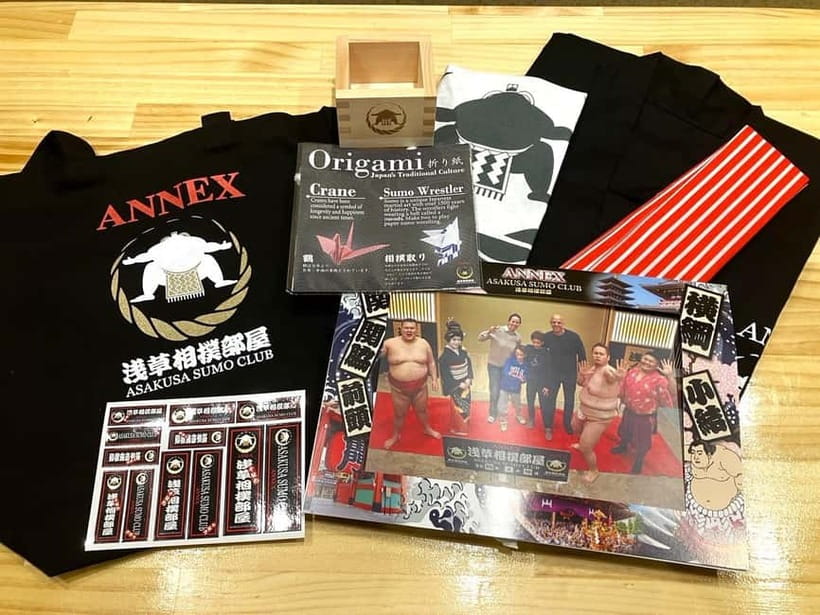
Standard table seats include the core sukiyaki meal, chanko hot pot, matcha dessert, and one free drink. This is the sensible choice if you mainly want to see the show and try the food without paying for an open bar. You still receive the bilingual commentary, entertainment, challenge opportunity, commemorative photo, and a category-specific souvenir.
Business sofa seats add spacious seating, tempura, and unlimited drinks. The sofa arrangement is more relaxed, and it offers good visibility of the ring. If you enjoy beer, sake, soft drinks, or a longer meal, the extra cost may be easier to justify.
First Class front-row sofa seats put you closest to the action. You receive the full meal with tempura, unlimited drinks, premium Japanese whisky including Yamazaki, and an exclusive souvenir set with a happi coat. This is the premium option for a celebration or for someone who wants the strongest connection to the ring.
The best seat is not automatically the most expensive one. At $103 per person for the experience as advertised, the value depends on what is included in your selected category. Standard is more appealing if you are light on alcohol. Business can be a strong middle choice if you want comfort and an open bar. First Class is for the front-row position and the extra gifts, not simply for a better explanation of sumo.
Photos, souvenirs, and the friendly finish
The program ends with time for commemorative photos with the wrestlers. A printed photo is included, and the staff help take pictures during the event. That is useful for solo visitors, who might otherwise have trouble getting a good shot of the sumo challenge or group.
Souvenirs vary by seating category and season. First Class includes the most substantial package, with a happi coat. Standard and Business guests also receive special gifts, though the exact items can change.
The photo session is not rushed in the same way as a quick attraction photo stop. The wrestlers and staff continue talking with people, and the atmosphere remains informal. If you want to ask about sumo after the bouts, have your questions ready. The question-and-answer time can be one of the most useful parts of the evening.
Food requests, access, and practical details
Vegetarian and vegan meals are possible, but you must request them at least two days before your reservation. A request made on the day cannot be guaranteed because the ingredients need to be prepared in advance.
Gluten-free and halal meals are not available. If you have either requirement, you may bring your own food, according to the supplied conditions. Do not assume that a regular meal can be altered after you arrive.
The venue is not wheelchair accessible because stairs are involved. It is also not suitable for babies under one year old. Infants do not receive meals, seating, or souvenirs.
Cancellation is flexible up to 24 hours before the experience for a full refund, and you can reserve now and pay later. Check the available start times when booking, since the two-hour event may be offered at different points in the day.
The meeting point is along Asakusa Kokusai Street, next to Matsuya Restaurant. The Annex can be confused with the main Asakusa Sumo Club, so check the venue name carefully before setting out. If you arrive at the wrong branch, ask the staff for help, but it is better to confirm the Annex location first.
Who will enjoy this most
I would choose this for a first visit to Tokyo when you want a cultural activity that does not require much prior knowledge. The bilingual explanations, short demonstrations, and audience questions make sumo approachable.
Families are a particularly good match. Children can watch the wrestlers, learn simple rules, take photos, and possibly enter the ring. The humor keeps the educational parts from feeling like a lecture.
It also suits solo visitors. The staff can help with photos, and the show gives you natural opportunities to interact without needing to arrive with a group. Couples may enjoy the dinner and front-row atmosphere, especially when combining the event with an evening in Asakusa.
I would be more cautious if your main goal is authentic access to the daily life of active wrestlers. This is a staged entertainment experience performed by retired wrestlers. Its strength is that it explains sumo while making the audience part of the show.
Should you book this Asakusa sumo experience?
Book it if you want a lively introduction to sumo, a substantial Japanese meal, and a chance to take part rather than simply sit in the audience. The geisha dance, bilingual host, close ring, wrestler photos, and friendly challenge give the evening plenty of variety.
Think twice if you dislike audience participation, need a quiet dinner, require gluten-free or halal food, or want to watch serious training by active wrestlers. Also compare the seat categories carefully. Standard offers the core experience, while Business and First Class earn their higher price through sofa seating, extra food, unlimited drinks, and premium souvenirs.
For most first-time visitors, this is a cheerful and easy way to understand Japan’s national sport. If you are willing to accept the theatrical format, the two hours deliver a lot: culture, food, humor, photos, and a story you will still be telling after you leave Asakusa.
FAQ
How long does the sumo show last?
The experience lasts about two hours.
Where is the meeting point?
The meeting point is along Asakusa Kokusai Street, next to Matsuya Restaurant.
Is this a serious sumo tournament or a training visit?
No. The show is an entertainment-style performance by retired sumo wrestlers. It is different from an early-morning visit to an active sumo stable.
Is the commentary available in English?
Yes. Live commentary is provided in both English and Japanese throughout the show.
What food is included?
The meal includes Japanese A5 wagyu beef sukiyaki, chanko hot pot, and matcha dessert. Tempura is also included with Business and First Class seating.
Are vegetarian or vegan meals available?
Yes, but you must request a vegetarian or vegan meal at least two days before the reservation date. A request made on the day cannot be accommodated.
Are gluten-free or halal meals available?
No. Gluten-free and halal meals are not provided, though you may bring your own food if needed.
Can I join the sumo challenge?
You may volunteer to enter the ring for a friendly challenge. Places are limited, and if many people want to participate, the final participants are selected by lottery.
Is the venue wheelchair accessible?
No. The venue has stairs and is not wheelchair accessible. It is also not suitable for babies under one year old.
Recently added around Japan
- 1.5 Hour VIP Sumo Event in Tokyo★ 4.5 · 24 reviews
- Tokyo VIP private nightlife tour with a local insider★ 5.0 · 24 reviews
- Private Custom Tokyo Tour VIP★ 5.0 · 50 reviews
- Tokyo: WARP SHINJUKU Nightclub Ticket with Drink / VIP Plan★ 4.2 · 55 reviews
- Kyoto & Nara Private Luxury Car Tour: Encounter with Deer★ 4.8 · 13 reviews
- Kyoto:Private Tour/Luxury Vehicle with Guide & photographer★ 4.8 · 35 reviews
- Osaka private Luxury Vehicle Tour:Freely Customized★ 4.8 · 11 reviews
- Haneda Airport Private Transfer – Luxury Car & Meet & Greet★ 4.5 · 68 reviews
Tokyo Luxury Tours, compared.

Luxury van Ride to famous car meet up spot Daikoku
Read our review →
Haneda Airport Private Transfer – Luxury Car & Meet & Greet
Read our review →

Browse the lists this tour appears in