
Review · MARRAKECH
Moroccan Desert 3-Day Luxury Tour from Marrakech
The best part of this Moroccan desert tour is the change of scene. In three days, you go from Marrakech’s busy medina to Atlas mountain passes, mud-brick kasbahs, narrow gorges, and the wide dunes of Erg Chebbi. The camel ride at sunset, followed by dinner and music at a desert camp, gives you the Sahara moment you came for.
I like the small groups of no more than 15, since that can make a long road journey feel more personal. I also like the mix of famous sights and ordinary Moroccan life: mint tea, village stops, Berber culture, and time with local camp guides. The main drawback is simple: this is a lot of Morocco in only three days, with a nine to ten-hour drive back to Marrakech on the final day.
Key points to know before booking
- Camel ride to Erg Chebbi: Expect about an hour on camelback to reach the desert camp, with a return ride the next morning.
- Aït Benhaddou and Atlas scenery: The first day crosses the High Atlas and visits one of Morocco’s best-known fortified villages.
- Comfortable but active nights: You spend one night in a riad or kasbah-style property and one night in a traditional bivouac tent.
- Long road days: The final drive to Marrakech takes about nine to ten hours, including stops.
- Small-group format: The maximum group size is 15, though some departures may be much smaller.
- Pack a small overnight bag: Your belongings for the camp may be carried on a camel, while larger luggage is stored at a hotel near the desert.
Why this three-day route works
Morocco’s major desert sights are far from Marrakech. That distance is the central fact to understand before you book. You are not taking a quick side trip from the city. You are crossing the country by road, using two nights to reach the Sahara and return.
For me, the appeal is the steady change in scenery. Marrakech gives you crowded lanes, red walls, and busy squares. Beyond the city, the road climbs through the High Atlas, passes mountain villages, and drops toward the dry valleys of southern Morocco. By the time you reach the dunes, you have seen a broad slice of the country rather than one isolated attraction.
The price is $450 per person. That includes transport in an air-conditioned vehicle, a driver and guide, two nights of accommodation, two dinners, two breakfasts, and the camel experience. Lunches and drinks cost extra, so budget for those each day.
At that price, the tour is most useful if you want the major desert experience without arranging several hotels, drivers, transfers, and camp reservations yourself. It is less appealing if you dislike long drives or prefer to spend several nights in each place.
More Luxury Desert Tours in Marrakech
- From Marrakech: 3-Day Desert with luxury camp, camel & meals
★ 4.6 · 922 reviews - Marrakech: 3-Day Desert Trip to Merzouga with Luxury Camp
★ 4.7 · 887 reviews - Experience Luxury in Zagora: 2-Day Desert Adventure
★ 5.0 · 651 reviews
Leaving Marrakech for the High Atlas
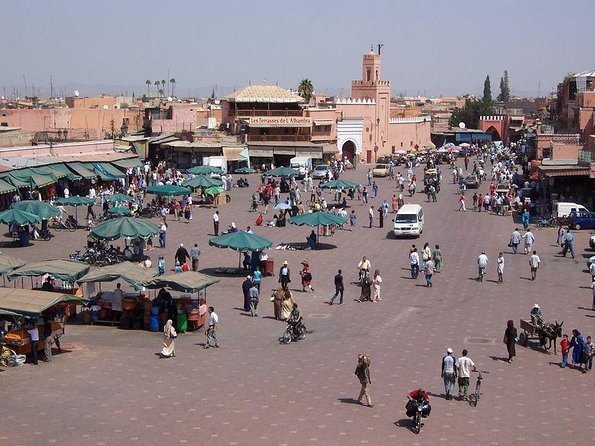
The pickup point is Hôtel Restaurant Café de France beside Jemaa el-Fnaa, with an 8:00 am start. The exact meeting point matters because the square and surrounding streets can be busy. You will want to arrive early and have your phone ready for confirmation details.
The first hours take you toward the High Atlas. The mountain road is scenic, but it can be tiring, especially for anyone prone to motion sickness. One useful detail from the tour experience is that drivers have sometimes adjusted seating so a passenger feeling unwell could sit near the front. If winding roads bother you, mention it early.
Stops break up the drive for photographs, refreshments, and restrooms. The pace is not a private road trip where you can linger everywhere, but the small-group format gives the guide some room to respond to the group. Guides named Moha, Khalid, Mohamed, Ibrahim, and Youssef have been associated with departures on this route. The guide you receive will depend on the date and group.
The driver-guide role is important here. A good guide does more than point out monuments. Guides such as Moha and Khalid have been praised for explaining Berber culture, local customs, village life, and the places along the road. Safe driving also matters, since the route includes mountain roads and many hours behind the wheel.
Aït Benhaddou, Ouarzazate, and the film country
Aït Benhaddou is one of the strongest stops on the route. This fortified village, or ksar, is built from earthen materials and rises above the surrounding dry country. Its compact lanes and defensive walls make it easy to understand why the place has become one of Morocco’s most recognizable sights.
You should expect a visit rather than a full day there. The route also includes Ouarzazate and a stop connected with Atlas Studios, one of Africa’s largest film studios. Atlas Studios can be interesting if you enjoy film sets and the way Morocco has been used to represent distant places on screen. It may feel less important if your main goal is architecture and local life.
The timing can change. In one small group, no one wanted to spend much time at Atlas Studios, so the group moved on. That is one benefit of a small departure: the day may feel less rigid than a large coach tour. Still, you should not assume every stop will receive equal time.
The first night is spent in accommodation described as a riad or kasbah-style property, with views, clean rooms, and dinner included. A lamb tagine has been singled out as a memorable meal. Vegetarian food is available if you request it at booking, but lunches and drinks are not included.
Todra Gorge and the long road to Erg Chebbi
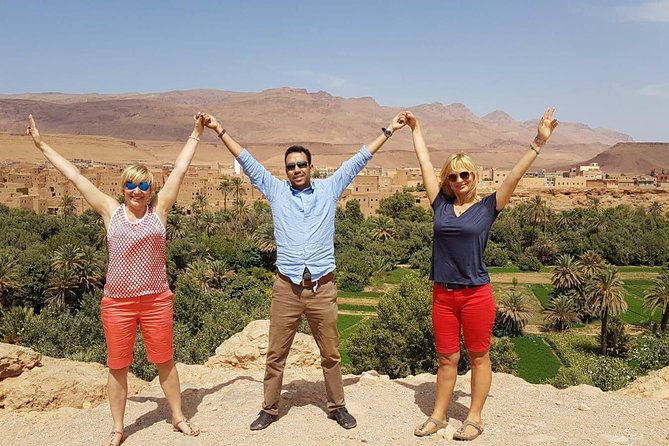
Day two takes you east toward Todra Gorge and the Erg Chebbi dunes. Todra Gorge is a welcome change after the first day’s mountain driving. The rock walls narrow around the road and walking area, giving you a chance to stretch your legs and see a more dramatic side of southern Morocco.
The route description allows about four hours for the Erg Chebbi portion, but the full day includes road time and stops. Be ready for another substantial drive. The reward comes late in the day, when the road reaches the desert edge and the camels are prepared.
Your luggage plan is practical. Take a small backpack with what you need for the night because it may be carried on a camel. Larger bags can stay with the vehicle and be stored securely at a hotel bordering the desert. Pack a warm layer, toiletries, medication, a phone charger, and anything you need before morning.
More Luxury Desert Tours in Morocco
- 3-Day Tour from Marrakech to Merzouga Luxury Camp with Camel
★ 5.0 · 601 reviews - From Marrakech: Merzouga 4 Day Luxury Tour w/ Optional Quad
★ 4.8 · 332 reviews - 3 days from Marrakech to Merzouga Desert with Luxury Camp
★ 5.0 · 274 reviews - Agafay : Luxury Dinner in the Desert with Camels
★ 5.0 · 189 reviews
Camelback into the Sahara
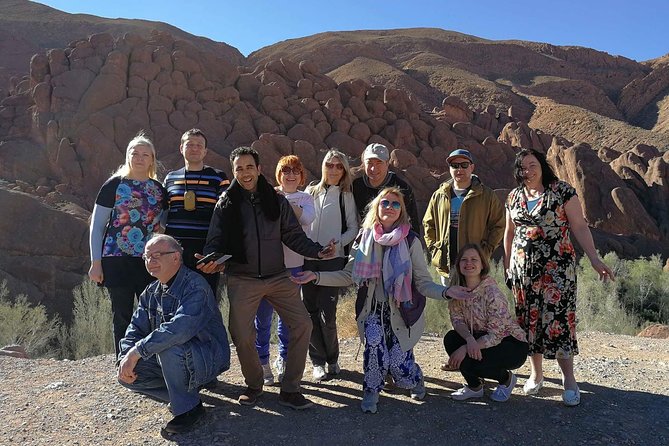
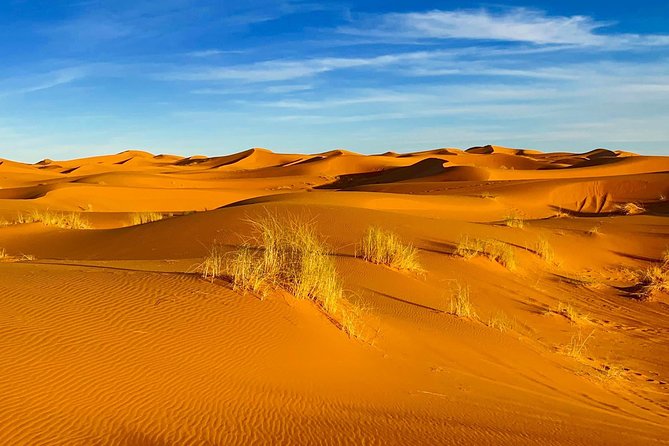
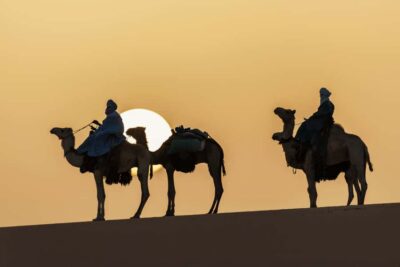
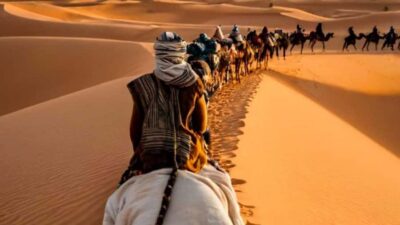
The camel ride is the emotional center of the trip. You climb onto a dromedary near the dunes and ride for roughly an hour toward the bivouac camp. Some departures have had rides closer to 90 minutes each way, but the exact duration can vary.
The ride is not difficult in the same way as a mountain hike, but it can be physically demanding. Getting on and off is the awkward part, and sitting upright for an extended period can leave your legs and back sore. The sand, sun, and wind add to the effort.
The timing is designed to bring you into the dunes near sunset. This is when the desert feels most dramatic, with the light softening across the sand and the bustle of the road falling away. Sandboarding has also been part of the experience for some departures, though you should not treat it as a guaranteed feature unless the operator confirms it.
At camp, dinner is included. The evening may include drumming, singing, dancing, and time around the fire with the camp team. The social side of the night is one of the better reasons to choose a camp rather than a quick camel ride with no overnight stay.
The tents are described as comfortable traditional Berber-style accommodations. This is called a luxury tour, but you should keep your expectations sensible. You are still sleeping in a desert camp, not a city hotel. The draw is the setting, the food, the music, and the chance to look up at the night sky.
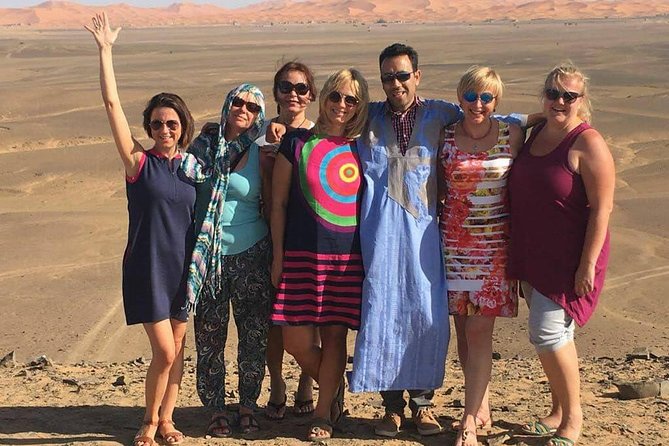
Bring warm clothes. The desert can be cold before dawn, and one particularly useful tip is to pack gloves for the early morning camel ride. A scarf is included, and it helps with sun, dust, and chill. The scarf stop may include photographs in traditional clothing. Some people enjoy this playful moment; others find it staged, so you can treat it as optional fun rather than a cultural obligation.
Sunrise, breakfast, and the return journey
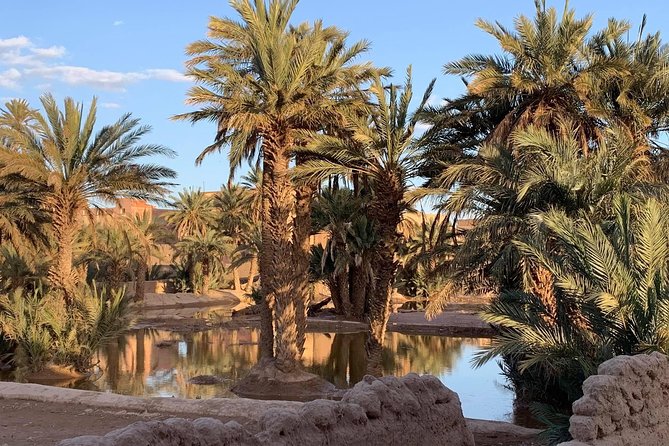
The second night is short for many people. A dawn wake-up allows time for the sunrise and the return camel ride. The quiet morning light is often the finest part of the desert, but it comes at the cost of sleep.
After breakfast, the route turns back toward Marrakech. This is the part you must accept before booking. The drive takes nine to ten hours with stops, and the tour ends at the original meeting point near Jemaa el-Fnaa.
The return road is not dead time if you use it well. Guides have explained local history, politics, languages, and Berber customs during the drive, and regular stops offer food, drinks, photos, and restrooms. Still, no amount of conversation changes the basic fact that day three is a long vehicle day.
Weather can also affect the plan. Snow or difficult conditions at the Tichka Pass have caused delays and even prevented access to Aït Benhaddou on some departures. Mountain roads are not fully under your control, so keep important evening plans in Marrakech flexible.
How the small-group format affects the experience
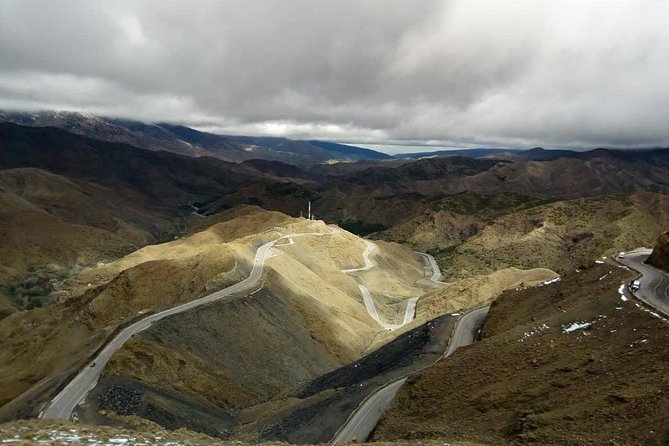
The maximum group size is 15, but some departures have been much smaller, including groups of three or five people. A small group can feel almost private, especially when everyone agrees on photo stops, meal timing, and how long to spend at a sight.
You may also make fast friends. A shared camel ride, an early wake-up, and three days in the same vehicle create a natural group rhythm. Solo visitors can find this especially useful, since the tour gives you company without requiring you to arrange a private departure.
The tradeoff is that flexibility depends on the group. If other people want to move quickly through Atlas Studios or stop often for photos, your day will reflect those shared choices. The group format also means you will not control every departure time.
Food, comfort, and what to pack
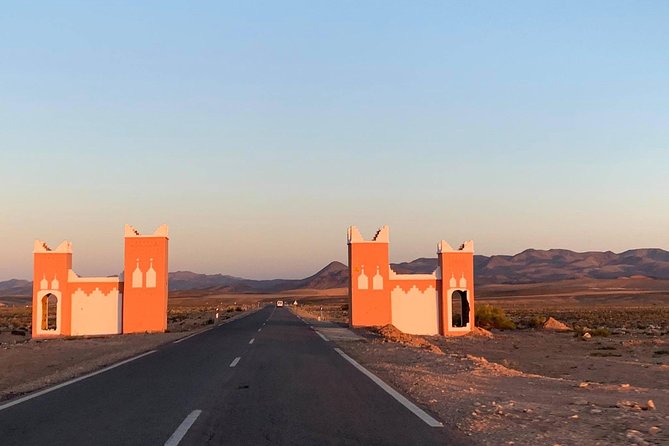
Two breakfasts and two dinners are included. The first-night meal may feature Moroccan dishes such as lamb tagine, and the camp dinner is part of the evening program. Lunches and beverages are extra, so carry some Moroccan dirhams for roadside stops and restroom visits.
The vehicle is air-conditioned, and the tour uses a small group rather than a large bus. That matters on the mountain roads and during the hot portions of the route. Several accounts also describe modern, clean vehicles and careful drivers.
Pack light for the camel portion:
- Warm clothes and gloves for the desert morning
- A scarf or face covering for sun and dust
- Comfortable trousers for the camel ride
- A small backpack for the bivouac night
- Cash for lunches, drinks, and restroom stops
- Motion sickness medication if winding mountain roads affect you
Children must be accompanied by an adult. The tour is near public transportation at its Marrakech meeting point, and most people can participate, but the camel ride and long road days require reasonable physical stamina.
Who should book this Sahara tour?
I would choose this trip if you have limited time in Morocco and want Aït Benhaddou, mountain scenery, Todra Gorge, and Erg Chebbi in one organized route. It suits people who value local explanations, shared meals, and a night around a desert camp more than a slow, resort-like schedule.
It is also a good match for solo visitors and couples who want a social small-group experience. The guide can make a major difference, so it is worth asking which guide is assigned. Moha, Khalid, Mohamed, Ibrahim, and Youssef have all been praised for friendly conversation, cultural explanations, and careful driving on different departures.
I would not choose it if you need long, unhurried visits at every sight. The road from Marrakech to the far eastern dunes is long, and the final return day is especially demanding. If you can add a fourth night, several people who took the shorter route wished they had done so.
The cancellation terms are straightforward: cancel at least 24 hours before the 8:00 am start for a full refund. Changes or cancellations inside that window are not refunded.
Should you book it?
Book this tour if the Sahara is a priority and you want a practical route from Marrakech that includes much more than dunes. The camel ride, desert camp, mountain roads, Aït Benhaddou, and Todra Gorge give you a strong first taste of southern Morocco for $450.
Skip it if you are mainly seeking rest, dislike long drives, or have only one free evening after returning to Marrakech. For the right person, the time in the vehicle is the price of admission to the desert. Pack lightly, bring warm clothes, keep your schedule flexible, and let the changing scenery do its work.
FAQ
Where does the tour start?
The tour starts at Hôtel Restaurant Café de France beside Jemaa el-Fnaa, at Rue des Banques in Marrakech.
What time does the tour begin?
The scheduled start time is 8:00 am.
Where does the tour end?
The activity ends back at the original meeting point near Jemaa el-Fnaa in Marrakech.
How long is the tour?
The tour lasts approximately three days.
How long is the drive back to Marrakech?
The return drive on day three takes about nine to ten hours, including stops.
What sights are included?
The route includes the High Atlas, Aït Benhaddou, Ouarzazate, Atlas Studios, Todra Gorge, and the Erg Chebbi dunes.
Is a camel ride included?
Yes. You ride a camel to the desert camp, with the ride taking about one hour according to the scheduled plan.
What accommodation is included?
Two nights of accommodation are included. The first night is in a riad or similar property, and the second night is in a bivouac camp in a traditional Berber tent.
Are meals included?
Two dinners and two breakfasts are included. Lunches and beverages are not included.
Can I request vegetarian food?
Yes. A vegetarian option is available, but you should request it when booking.
More three-day trips in Marrakech
- Majestic Desert: 3-Day Luxury Journey from Marrakech to Fes
★ 4.9 · 1,437 reviews - 3-Day Private Luxury Golden Triangle Tour to Agra and Jaipur From New Delhi
★ 5.0 · 424 reviews - All-Inclusive 3 Day/2 Night Halong Luxury Cruise Meals, Cave, Kayaking, Swimming
★ 5.0 · 346 reviews - 3-day Motorbike Ha Giang Loop Luxury Tour With Easy Rider
★ 4.9 · 298 reviews
Recently added around Marrakech
- Top vip one hour private flight royal breakfast on board★ 5.0 · 157 reviews
- Taxi Airport marrakech vip★ 5.0 · 102 reviews
- 4 Days Sahara Desert VIP Private Tour from Marrakech & Luxuy Camp★ 5.0 · 12 reviews
- Private Luxury 4 Day Desert Tour from Marrakech to Sahara Desert★ 5.0 · 28 reviews
- Luxury Private Full Day Trip To Essaouira★ 5.0 · 14 reviews
- Luxury private day trip – Atlas Mountains, Agafay Desert & camels★ 5.0 · 102 reviews
- Luxury Agafay Desert : Quad Bike, Camel Ride, Pool & Dinner Show★ 5.0 · 83 reviews
- Agafay Desert Luxury, Quad, Camel, Pool, Dinner Show and Concert★ 5.0 · 130 reviews
Luxury Desert Tours, compared.
Desert Safari with VIP BBQ and Optional Quad Bike
Read our review →
Majestic Desert: 3-Day Luxury Journey from Marrakech to Fes
Read our review →
Dubai Red Dunes with Sandboarding, Camel Ride, Falcon & VIP Camp
Read our review →
Desert Safari: Luxury Fortress Dinner, Camel Ride & Dune Bashing
Read our review →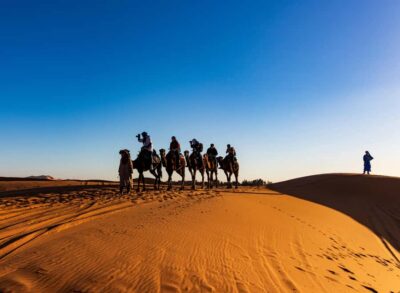
2-Day Merzouga Desert Trip w/Luxury Tent & Dinner
Read our review →
Experience Luxury in Zagora: 2-Day Desert Adventure
Read our review →Browse the lists this tour appears in