
Review · SPAIN
La Palma: VIP Night Sky Tour With Your Own Telescope
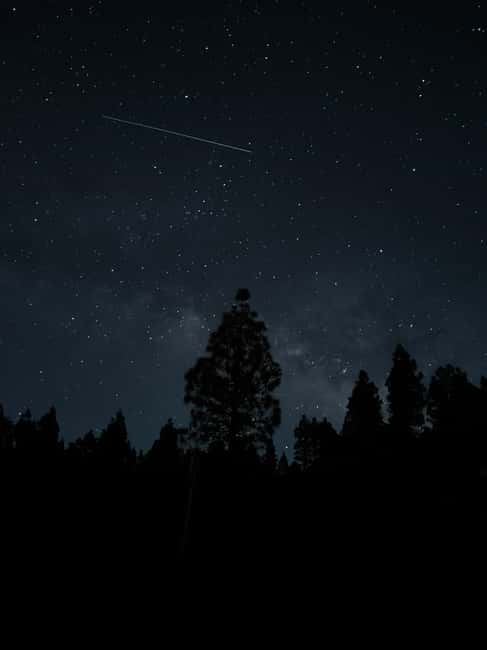
La Palma’s real night show starts when the lights go out. At this small-group stargazing session, you get a telescope reserved for your booking, not a quick turn at a shared eyepiece. María José and Nicolás guide you from visible constellations and satellites to the Moon, planets, star clusters, nebulae, and galaxies.
I like the private telescope, which lets you ask questions and choose what to see without being rushed. I also like the guides’ mix of science, myths, and practical sky-watching, plus the three professional photos included afterward. The main drawback is simple: this is an outdoor activity in mountain air, and clouds, wind, haze, official alerts, or a bright full moon can change the plan.
Key points at a glance
- Your own telescope: A telescope is reserved exclusively for your booking, with extra time to adjust it for your eye and ask questions.
- Two possible mountain viewpoints: Llano del Jable and Llano de Las Ventas sit at about 1,341 and 1,320 meters above sea level.
- A private backup location: If conditions require it, the session may move to a sheltered or private setting near San Antonio Volcano in Fuencaliente.
- A guide-led sky tour: María José and Nicolás combine laser-guided stargazing, binocular viewing, science, myths, and legends.
- Small group size: The total group is limited to 10 people, making the telescope time more personal.
- Cold-weather planning matters: Bring warm layers and shoes, and wait for a same-day message confirming the time and location.
Why a private telescope changes the night
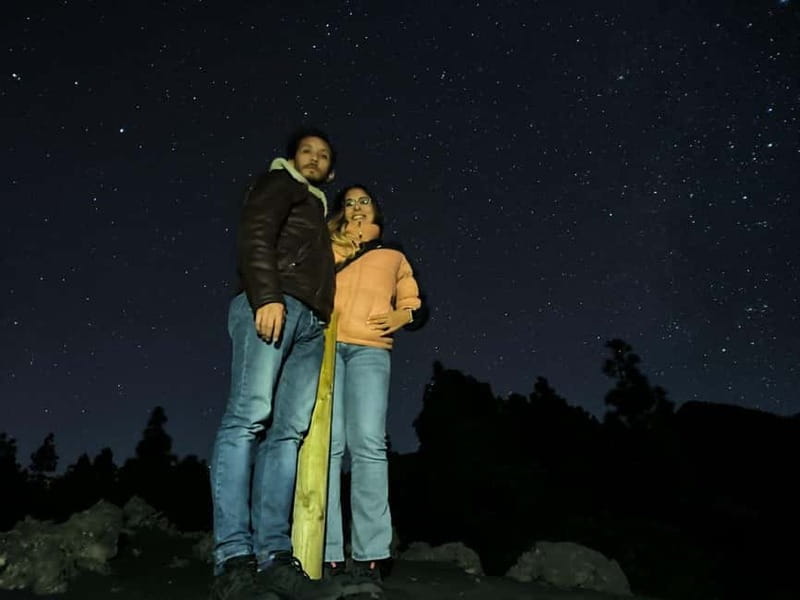
Many telescope sessions involve lining up for a brief look, then moving aside for the next person. This La Palma option takes a more relaxed approach. Your booking has a telescope reserved for it, so you can spend longer on an object, ask for another look, or point the instrument toward something that catches your interest.
That does not mean you get an entirely private guide. The activity is a small-group experience, with a maximum of 10 participants. Still, the separate telescope gives you more control than a standard group session. You can have one guide help you adjust the telescope to your eye while the wider group continues with the main explanation.
I especially like this arrangement for people who are curious but not yet comfortable with telescopes. You do not need to know how to focus an instrument, find a planet, or understand technical terms before arriving. The guide helps you use the equipment and explains what you are seeing.
One point deserves honest attention. A person with no astronomy background may hear specialist terms during the session. The guides are described as clear, friendly, and good at answering questions, but one recent participant found some English explanations difficult and felt that the technical vocabulary moved quickly. If English is not your first language, ask questions whenever something is unclear. The guides also work in Spanish.
More VIP Experiences in Spain
- From Puerto de la Cruz: Teide and Masca VIP Tour
★ 4.7 · 706 reviews - Madrid: Royal Palace VIP Tour with Skip-the-Line Ticket
★ 4.3 · 645 reviews - Bilbao: Guggenheim VIP Experience. Small Group. Expert Guide
★ 4.7 · 528 reviews
Starting with the naked-eye sky
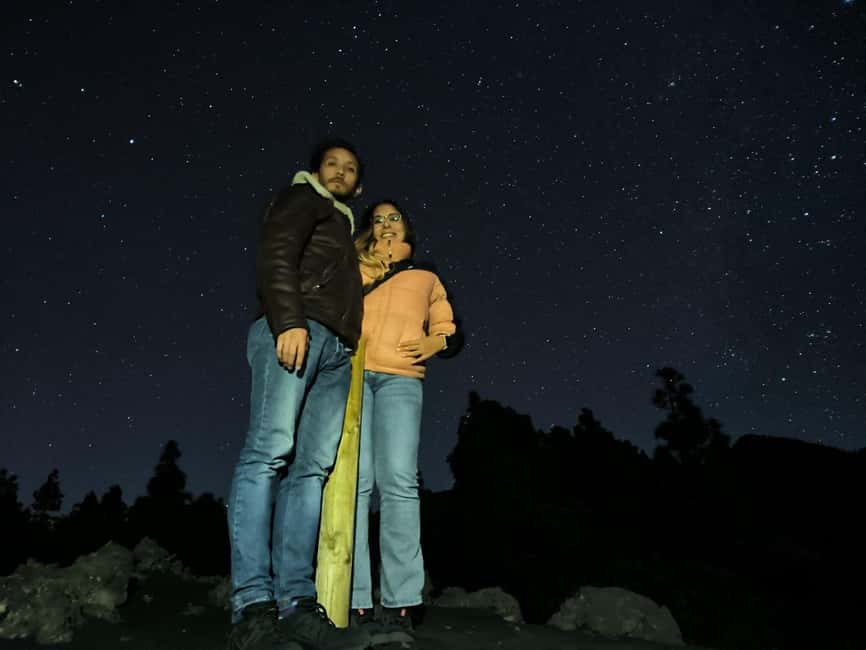
The evening begins with a welcome and an introduction to the team. The guides then use an astronomical laser to point out constellations, planets, satellites, and other visible objects.
This first stage is important because it teaches you how to look up without equipment. A telescope can show you a small target in detail, but the naked-eye portion helps you understand where that target sits in the larger sky. You may find yourself learning the shape of a constellation, following a satellite, or recognizing why a bright point is a planet rather than a star.
María José and Nicolás also bring in myths and legends alongside the science. That gives the session a human side without replacing the astronomy. You hear why people have connected certain star patterns with stories, then receive the scientific explanation for what you are actually seeing.
The laser makes this much easier than trying to follow a verbal description. In the dark, look in the direction of the beam and let the guide build the pattern slowly. If you are bringing children, this section may be the easiest way to keep them involved before the more technical telescope work begins.
Binoculars for the wider view
After the naked-eye introduction, binoculars are used to explore broad areas of the sky. This is a useful middle step between simply looking up and studying a narrow point through a telescope.
Binoculars can help you see a wider section of the sky at once. That makes them helpful for understanding star fields and the general shape of a region before turning to a more powerful instrument. The guide continues to explain the objects in view, adding stories and scientific context.
The activity is not only about collecting impressive sights. It teaches several ways to observe: unaided vision for orientation, binoculars for wide sections, and the telescope for closer views. I like that progression because it gives you a better sense of scale. Space is not just a list of distant objects shown one after another.
From the Moon to Jupiter and Saturn
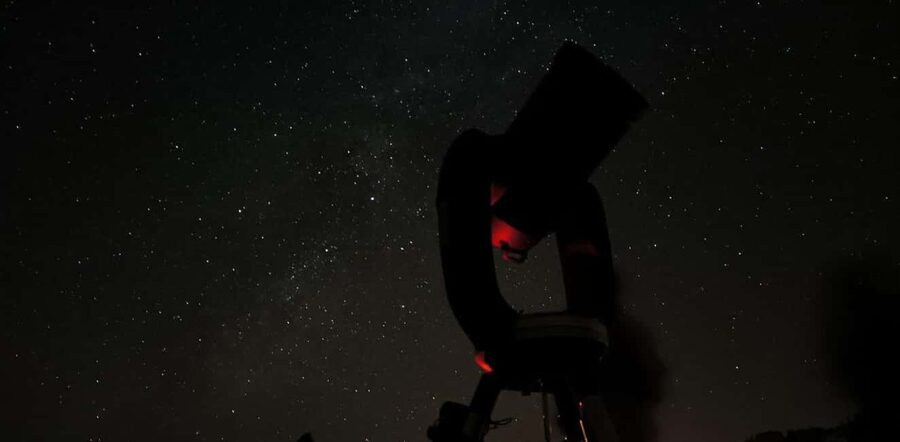
The telescope portion brings the largest visual rewards, but the exact menu depends on the sky. The Moon may be part of the session, along with planets such as Jupiter or Saturn when they are visible and positioned well enough to observe.
The Moon is often a strong target because its surface can be appreciated even during a shorter viewing period. Planets offer a different kind of interest. Jupiter and Saturn are not guaranteed on every night, so you should treat them as possible highlights rather than promised stops.
Your private telescope is adjusted for your eye, and you can ask the guide to return to an object or show you something else. That flexibility matters. Sometimes the first view through an eyepiece takes a little patience. Having extra time makes it easier to settle your eye, understand what you are looking at, and enjoy the sight instead of worrying about holding up a line.
The guides use professional equipment, including reflector telescopes. You do not need to operate the instrument alone, but you can take part in the process and feel more like an amateur astronomer for the night.
Same destination, a different level of comfort:
- Luxury Catamaran sailing with welcome Drinks Tapas Max10-12Person
★ 5.0 · 1,339 reviews - Puerto Banús by Sailboat: Discover Marbella’s Luxury Coast
★ 4.8 · 499 reviews - Bilbao: Guggenheim Secrets & Savor the Sea’s Treasures. VIP
★ 4.6 · 458 reviews - Tenerife: Whales and Snorkeling Tour on a Luxury Yacht
★ 4.9 · 443 reviews
Galaxies, nebulae, and star clusters
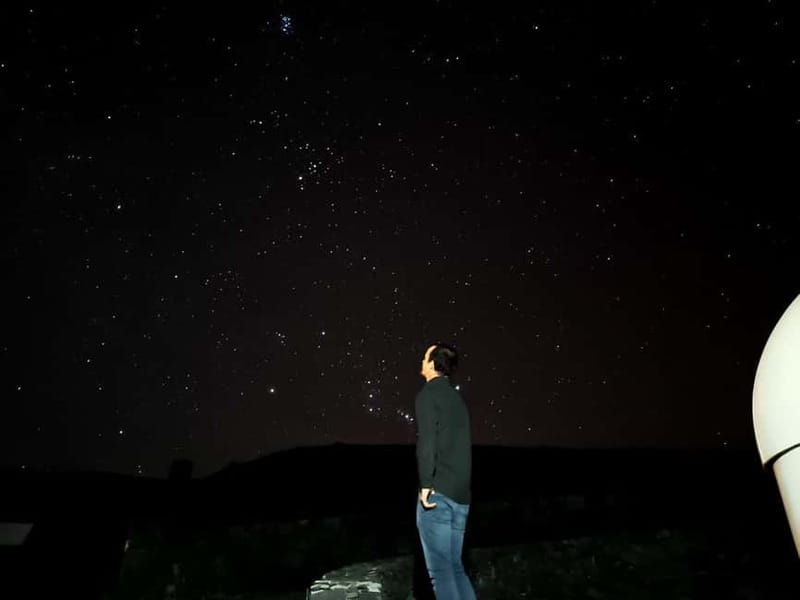
The session then moves toward more distant targets. Galaxies, nebulae, and star clusters become the focus when conditions and object positions allow.
These objects are usually less immediately obvious than the Moon or a bright planet. A faint patch through the telescope may require explanation before you recognize what you are seeing. That is where the guide’s role matters. You receive help identifying the object and understanding why it appears as it does.
I like the idea of ending with these faraway targets because it shifts the mood. You begin with things people can often recognize, then gradually consider objects far beyond the Solar System. The guide connects the view to astronomy and the history of sky watching, rather than treating the telescope as a simple picture machine.
Do not expect every possible object on one visit. La Palma’s sky may be excellent, but cloud, haze, wind, humidity, the Moon, and the time of year all affect visibility. The activity usually lasts about 90 minutes, though it may run from 1.5 to 1.75 hours when the group has many questions and strong interest.
Choosing between La Palma’s viewing locations
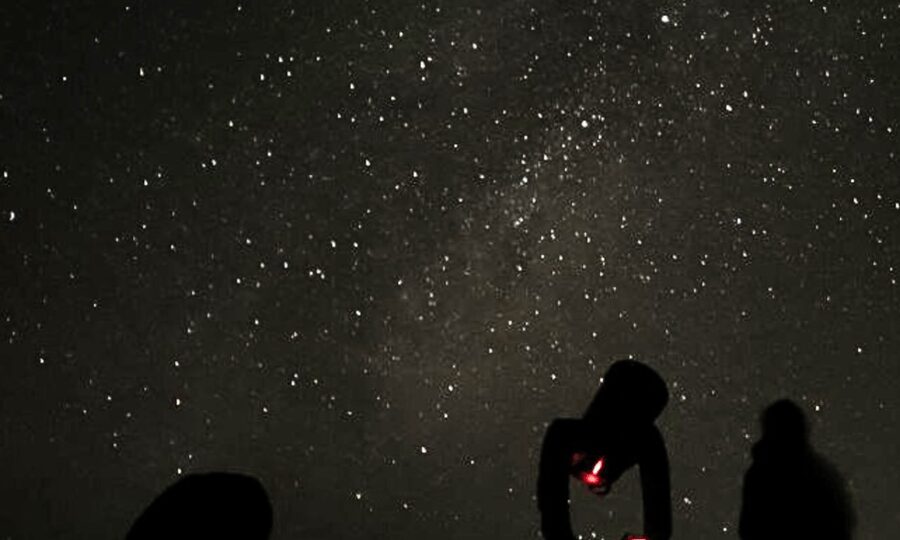
The usual meeting points are the Llano del Jable Astronomical Viewpoint and the Llano de Las Ventas Astronomical Viewpoint. They are about five minutes apart and sit at roughly 1,341 and 1,320 meters above sea level. Both have parking.
From Santa Cruz, Los Cancajos, or Los Llanos, the stated driving time is about 39 minutes to the usual viewpoints. That makes a rental car or other independent transport important, since hotel transfers are not included.
A useful parking detail can make or break a dark-sky session. When you arrive, park with your headlights facing the road rather than toward the observation area. Turn off the lights as soon as practical. Walk toward the group using a red light if you have one. If you only have a white light, point it at the ground so you do not dazzle people already looking through telescopes.
Find the guides by the telescopes and red light, then identify your booking by asking for María José or Nicolás. Arriving 15 minutes early gives you time to park and approach without disturbing the session.
The third possible setting is near San Antonio Volcano in Fuencaliente, at about 633 meters. It is listed as a private location and is around 40 minutes from Santa Cruz, Los Cancajos, and Los Llanos, or about 15 minutes from the Princess Hotel. One evening was moved there because of the weather, and the lower site still provided a strong setting for observation.
The exact place is not confirmed until the day of the activity. The team checks wind, humidity, clouds, haze, government alerts, site occupancy, and the position of visible objects. The meeting time can also shift because sunset and visibility change from night to night.
Weather is part of the booking
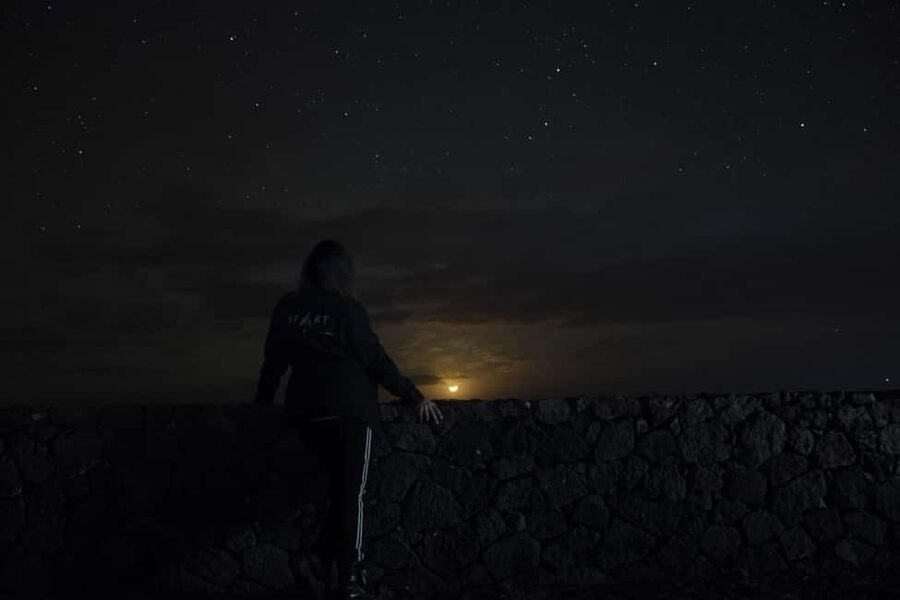
This is not a show that runs on a fixed indoor schedule. The sky decides what is possible.
You receive the exact meeting point and time on the day of the activity through WhatsApp, email, or SMS. Keep your phone nearby and tell the provider in advance if you do not use WhatsApp. The activity may be postponed, relocated, or canceled if conditions are unsafe or unsuitable for observation.
A private indoor or sheltered place may be available when the regular viewpoints are affected by clouds, wind, or official alerts. That option is not guaranteed, so you should book this with some flexibility rather than placing it on the only night you have on La Palma.
Full moon nights also change the character of the session. The Moon becomes the main subject, while faint galaxies and nebulae may be harder to see. That is not a bad night, but it is a different one. If your priority is seeing the faintest deep-space objects, ask about moon conditions before choosing your date.
What to wear and what is missing
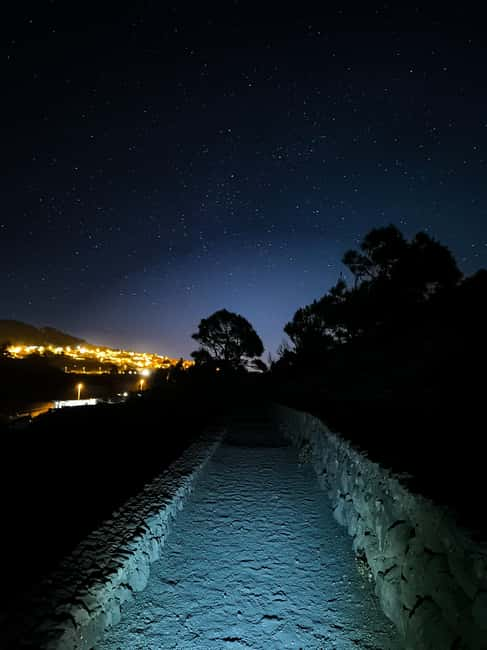
Mountain air can feel very cold after sunset, even if the afternoon was warm near the coast. Bring warm clothing, comfortable layers, and warm shoes. One participant specifically warned that the high locations can be extremely cold, and that is practical advice worth taking seriously.
Food is not included, and bathrooms are not listed at the viewpoints. Plan accordingly before leaving your hotel or town. Bring only what you need, since bright screens and lights can interfere with the group’s night vision.
The activity is wheelchair accessible, and the setting is described as comfortable and accessible for people with reduced mobility. Since the exact location can change, it is sensible to confirm any particular mobility needs when booking.
Is $58 a fair price?
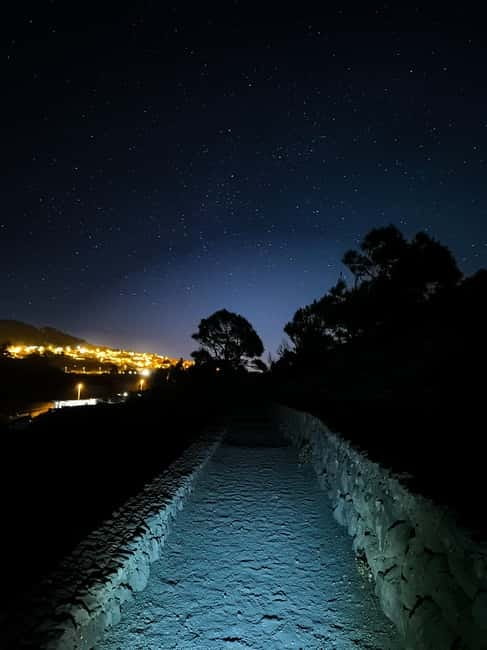
At $58 per person, this is not the cheapest way to spend an evening outdoors. The value comes from what is included beyond a quick look through a public telescope.
You receive a guided session, naked-eye instruction, laser pointing, binoculars, a telescope reserved for your booking, extra time for questions, and three professional star photos. The group limit of 10 also helps keep the session personal. For a couple, family, or small group that wants to share one telescope and ask plenty of questions, that package makes reasonable sense.
The price is less compelling if you only want a few dramatic views and do not care about explanations. The sky may also limit what you see, and no provider can guarantee Jupiter, Saturn, galaxies, or nebulae on a particular night.
The reserve-now, pay-later option and free cancellation up to 24 hours before the activity make planning easier. Still, the same-day weather message is the key practical detail. Do not assume your original time and location are final until you receive confirmation.
Who will enjoy this La Palma stargazing session
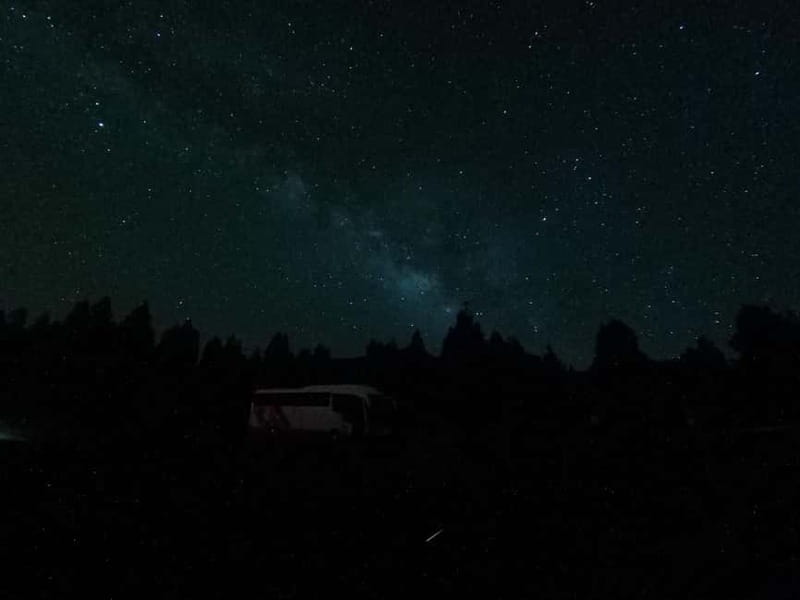
I would choose this for someone who wants to understand the sky, not just glance through an eyepiece. It suits couples, families, and small groups who enjoy asking questions and taking their time.
It also works well for beginners, provided you are willing to speak up when astronomy terms move too fast. The guides have been described as friendly, funny, clear, and enthusiastic, and María José and Nicolás are the people to look for at the meeting point.
People with prior astronomy experience may appreciate the freedom to request objects and spend longer with the telescope. Still, the equipment and targets depend on the night, so this is not a specialist observing session built around a fixed technical program.
The main audience I would not recommend it to is anyone who dislikes cold, uncertain timing, or outdoor plans that can change at short notice. If you need a guaranteed indoor attraction with fixed hours, choose something else for the evening.
FAQ
How long does the VIP night sky tour last?
The stated duration is 90 minutes. Depending on the group’s questions and interest, the activity can last from about 1.5 to 1.75 hours.
What languages are available?
The live tour is available in English and Spanish.
Do I get a telescope just for my booking?
Yes. A telescope is reserved exclusively for your booking, allowing you to observe at your own pace and ask for specific objects.
Where does the activity meet?
The usual meeting points are the Llano del Jable Astronomical Viewpoint and Llano de Las Ventas Astronomical Viewpoint. The activity may also move to a private location near San Antonio Volcano in Fuencaliente.
When will I receive the exact meeting point and time?
The provider confirms the location and approximate start time on the day of the activity after checking weather, visibility, alerts, site occupancy, and the position of celestial objects.
What should I bring?
Bring warm clothing, comfortable clothes, and warm shoes. A red light is useful for approaching the group without affecting other people’s night vision.
Is transportation included?
No. Transport to the meeting point and to your hotel is not included.
What happens if the weather is poor?
The activity may be postponed, relocated, or canceled if the conditions are unsafe or unsuitable. A sheltered or indoor location may be available when the usual viewpoints cannot be used.
Should you book it?
Book this tour if you want a slower, more personal introduction to La Palma’s night sky and like the idea of using a telescope rather than simply watching a guide demonstrate one. The private telescope, small group, flexible viewing time, and three photos give the $58 price a fair value.
Before booking, accept three conditions: the meeting point may change, the sky may not show every object you hope to see, and the mountain air can be cold. Keep your phone on for same-day updates, arrive early, and bring serious warm clothing. If you do that, this is a thoughtful choice for turning one La Palma evening into a hands-on astronomy lesson.
Recently added around Spain
- Granada : Alhambra Prestige Group Tour (VIP tickets included)★ 4.0 · 22 reviews
- Custom Private & VIP Highlights Tour of Gran Canaria★ 5.0 · 55 reviews
- Firgas, Tejeda, Guayadeque – VIP Tour Gran Canaria★ 4.5 · 173 reviews
- Gran Canaria Highlights Private Tour VIP★ 5.0 · 106 reviews
- Luxury Charter Blue Dream★ 5.0 · 80 reviews
- Fuerteventura: DISCOVER FUERTEVENTURA TOUR 7 hours max 8 people★ 5.0 · 34 reviews
- Fuerteventura: Cofete Beach and “Villa Winter” VIP Tour★ 5.0 · 111 reviews
- South Fuerteventura VIP Cruise on board a Turkish Gulet★ 4.5 · 16 reviews
VIP Experiences, compared.
Desert Safari with VIP BBQ and Optional Quad Bike
Read our review →
Cu Chi Tunnels & Mekong Delta Tour with VIP Limousine Transfer
Read our review →
Legendary Venice: Doge’s Palace, St Mark’s & VIP Terrace Access
Read our review →
VIP All inclusive Best of the best Giza Pyramids,Sakkara,Memphis
Read our review →
VIP Best Reviews: Bohemian & Saxon Switzerland from Prague
Read our review →
Luxury VIP Hammam & Spa with Transfer & Drink
Read our review →
Burj Khalifa VIP Experience Level 152 Lounge Access
Read our review →
Premium Neuschwanstein Castle and Linderhof VIP Tour from Munich
Read our review →Browse the lists this tour appears in