

Review · ITALY
From Naples: Pompeii Ruins VIP Guided Tour
Pompeii is not a ruin you simply look at. You walk its streets, cross its forum, pass old bakeries, and peer into homes that were sealed by Vesuvius in 79 AD. This tour gives you a tight, well-planned introduction, with skip-the-line entry and round-trip transport from selected Naples meeting points.
I like the small group size, capped at 12, and the fact that the vehicle has air conditioning, a real gift on a hot Campania day. I also like the focus on ordinary Roman life, from shopping streets to bath houses, rather than only grand monuments. The main catch is that a live guide is guaranteed only when at least six people book in the same language. Smaller groups receive an audio guide instead.
Key points to know before booking
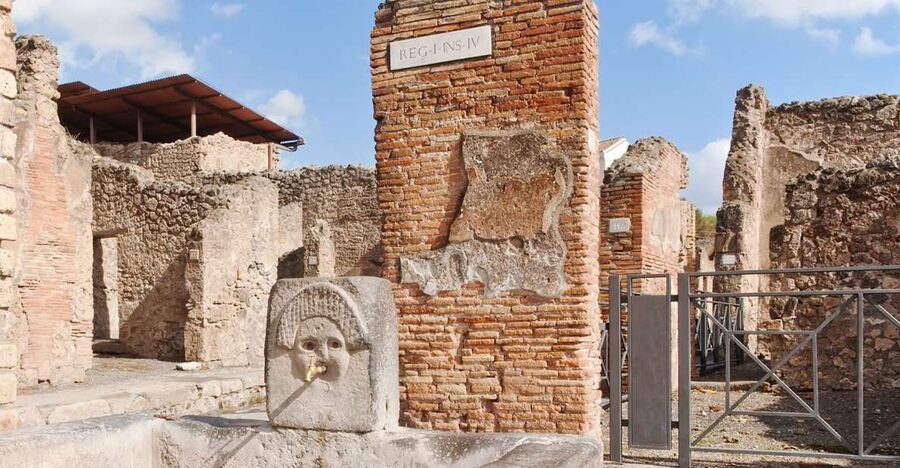
- Two hours inside Pompeii: The walking portion covers major public buildings, homes, shops, streets, and religious or burial areas.
- Small groups up to 12: This is more manageable than a large coach tour, though the actual group may be bilingual.
- Live guide only with enough participants: English, Italian, or Spanish commentary is offered when at least six people join in that language.
- Air-conditioned transport from Naples: Pickup is available at selected meeting points, not from every address in the city.
- Possible cameo and coral stop: If time allows, you may visit a local factory to see how cameos and coral jewelry are made.
- Not designed for limited mobility: Expect uneven ancient paving and a substantial amount of walking.
Why Pompeii works best with a guide
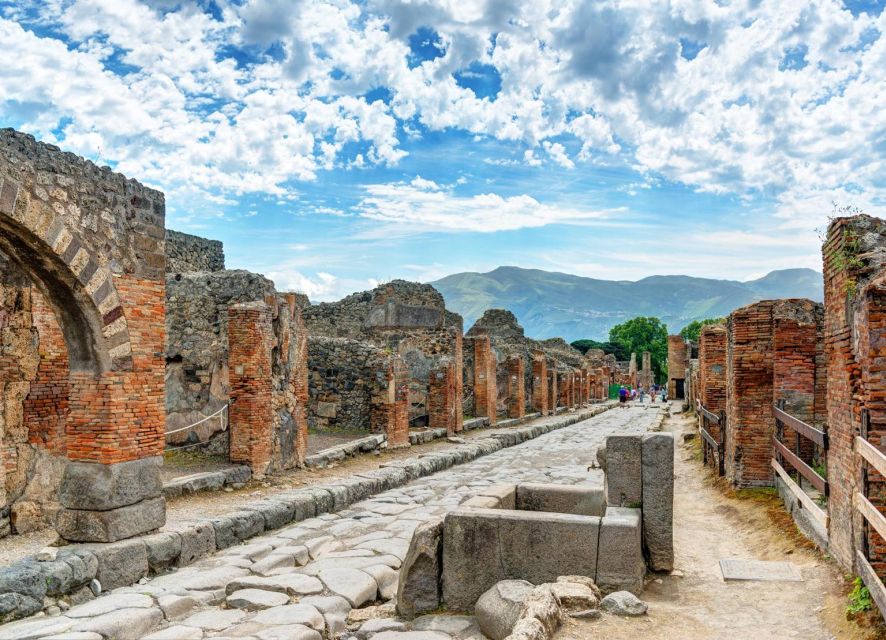
Pompeii can look like a jumble of walls if you do not know what you are seeing. A guide helps turn a doorway into a bakery, a stone counter into a shop, and a worn street into part of a functioning Roman neighborhood.
The value is not only historical dates. You learn how people moved through the city, where they washed, shopped, watched performances, and gathered in public spaces. The story of the eruption gives the place its drama, but daily life is what makes the visit feel real.
The tour spends about two hours at the archaeological park. That is enough time for a strong first look, but not enough to inspect every open street and building. Pompeii is large, and the site can easily absorb an entire day if you want to explore at a slower pace.
For a first visit from Naples, the shorter format is useful. You see the main sights without having to plan train connections, entrance tickets, or a route through the ruins. If you already know Pompeii well, though, the fixed route and limited time may feel too brief.
More VIP Experiences in Italy
- Legendary Venice: Doge’s Palace, St Mark’s & VIP Terrace Access
★ 4.5 · 5,033 reviews - Rome: Colosseum Arena, Roman Forum & Palatine Hill VIP Tour
★ 4.5 · 3,674 reviews - VIP Vatican Breakfast and Guided Tour with Sistine Chapel Access
★ 4.5 · 1,796 reviews
Leaving Naples for the ancient city
The experience begins at a selected pickup point in Naples. You need to confirm the exact place and time with the provider before setting out. Do not assume the vehicle will collect you at your hotel door.
The driver waits only five minutes for late arrivals. That makes it important to reach the meeting point early, especially if you are unfamiliar with Naples traffic or the local streets. Round-trip transport removes much of the usual planning work, and the air conditioning matters during the hottest months.
The ride itself is not the focus of the outing, but it makes this tour practical for anyone who wants Pompeii without arranging a separate train journey. It also keeps the visit within a 3.5-hour window, including transport and the archaeological stop.
Your group may be bilingual. That is worth knowing before you reserve, since commentary can take longer when two languages are used. The small group limit helps, but you should still expect the pace to be set by the guide and the needs of the full group.
Entering Pompeii through a separate entrance
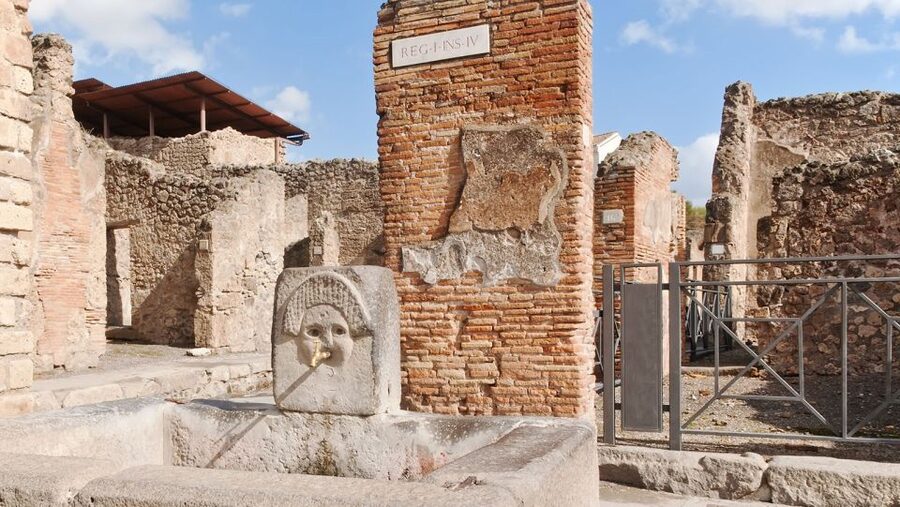
The included Pompeii Archaeological Park ticket and separate entrance are useful advantages. You do not have to spend your limited time sorting out admission after arriving.
Once inside, prepare to walk over old stone streets. The footing can be uneven, and the site has little shade in many places. Wear comfortable shoes, bring a hat, and apply sunscreen before the tour begins. Food and drinks are not included, so plan accordingly within the rules of the park and the timing of your outing.
Pompeii was buried during the eruption of Mount Vesuvius in 79 AD. Ash and volcanic material covered the city, preserving an extraordinary amount of its street plan, homes, public buildings, and decorative work. The result is not a polished museum. It is a city with broken walls, exposed rooms, worn paving, and open views into the past.
That rough quality is part of the appeal. You can see how spaces connected rather than viewing isolated objects behind glass. At the same time, the scale and uneven surfaces demand attention. This is not a sit-down sightseeing experience.
Walking the streets, shops, and bakeries
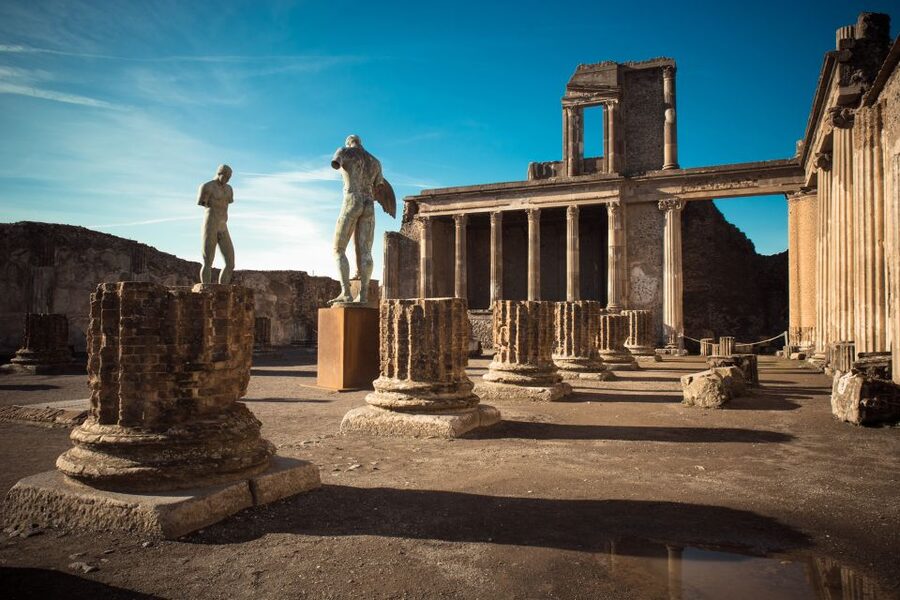
One of the best parts of the route is the ancient shopping street. You pass preserved commercial spaces, including bakeries and pizzerias in the modern sense of the word only loosely. These were places where food was prepared and sold, giving you a clearer picture of the city as a working community.
I find these details more useful than a long list of emperors. A shopfront tells you how people spent money. A bakery shows the practical side of city life. A street reveals how closely homes, businesses, and public spaces sat beside each other.
The guide also explains daily Roman life in the first century AD. That context helps you read what remains. Without it, a row of rooms can seem empty. With it, you begin to notice the difference between a private home, a commercial space, and a public building.
The colorful mosaic work is another highlight. These floors and decorative surfaces have survived for centuries, though conditions and access can vary. You may not be able to approach every piece closely, so listen carefully when the guide points out the best examples.
Same destination, a different level of comfort:
- Colosseum, Roman Forum & Palatine Hill Guided Tour
★ 4.5 · 1,568 reviews - VIP Vatican, Sistine Chapel & St. Peter’s Basilica Guided Tour
★ 4.5 · 1,128 reviews - From Naples – VIP Tour with small groups on the Amalfi Coast
★ 4.8 · 895 reviews - Luxury catamaran from Porto Rafael-Palau to the Maddalena Archipelago
★ 5.0 · 751 reviews
Villas, mosaics, and the house of a wealthy resident
Pompeii’s homes show the gap between ordinary work and private wealth. The route includes the house associated with the richest man in Pompeii, giving you a look at the scale and decoration available to the city’s elite.
The Villa of the Mysteries is another important stop. Its preserved rooms and artwork offer a different feel from the commercial streets. You see how a large residence could function as both a home and a display of status.
Do not expect every room to look complete. Pompeii has suffered from weather, age, past excavation, and ongoing preservation work. Some areas may be closed or viewed from a distance. The strength of the visit lies in the amount of structure that remains, not in perfect reconstruction.
A guide can also explain why mosaics matter. They were not simply decoration in the modern sense. Their placement, subject, and craftsmanship helped shape the character of a home. The best commentary connects the art to the people who lived around it.
The theater, amphitheater, and public Pompeii
The tour includes Pompeii’s theater, where citizens watched performances. This is a useful reminder that the city was not only a place of work and residence. People gathered for entertainment, public events, and shared civic life.
The amphitheater gives another sense of the city’s public scale. You see where large crowds could assemble and how public buildings fitted into the wider community. These spaces are often easier to appreciate with a guide because their purpose is not always obvious from the surviving stonework.
The forum is one of the essential stops. It was the civic heart of Pompeii, surrounded by public and religious buildings. Standing there helps you understand the city’s layout, even if the forum itself feels more open and damaged than the villas.
The bath houses add a more personal side of Roman life. They were not just places to wash. They formed part of the social routine of the city. A brief explanation can help you picture how people used the rooms and why public baths mattered so much in Roman communities.
The necropolis and the story of the eruption
The necropolis introduces Pompeii’s relationship with death and memory. Burial areas were generally located outside the settled city, so this part of the route also helps explain how the city was organized.
The eruption story gives the entire visit its emotional weight. In 79 AD, Vesuvius buried Pompeii, preserving buildings and objects while ending the lives of many residents. The guide explains the disaster alongside the evidence left in the streets and structures.
It is best to approach this part with respect rather than treating it as spectacle. The ruins reveal a sudden interruption of daily routines. A shop, home, bath, or street becomes more affecting when you understand that ordinary life stopped there.
The tour does not turn the visit into a long disaster lecture. Its focus remains on the city’s people and buildings. That balance works well for a first visit, especially if you want historical context without spending the full day on one subject.
The possible cameo and coral workshop
If time permits, the outing may include a stop at a local factory where you can learn about cameos and coral craft. Cameos are carved pieces made from materials such as seashells, while coral is used in jewelry.
This stop adds a connection to a craft tradition associated with the region. It can be interesting if you want to understand more about local decorative work or are considering a small purchase.
The wording matters: this visit is only possible if time allows. Pompeii is the main event, so you should not book this outing specifically for the factory. The stop may also use some of the time available around the archaeological visit.
If you prefer to spend every minute among the ruins, this possible detour is a consideration. If you enjoy local crafts and want a change of pace after the ancient site, it may be a pleasant addition.
Live guide or audio guide?
A live guide is available in English, Italian, or Spanish when at least six participants join in the same language. Groups of five or fewer receive an audio guide instead. Audio commentary is available in French, Portuguese, Polish, Chinese, German, and Japanese, in addition to the live-guide languages.
This arrangement makes the tour available to more people, but it creates an important difference in the experience. A live guide can respond to the group, adjust the pace, and point out details as they appear. An audio guide gives you more independence, but less opportunity to ask questions.
The group may also be bilingual. If language choice is important to you, confirm the arrangements before booking. The provider can tell you the pickup details and help clarify the expected language setup.
The strongest praise for this experience centers on the guide’s storytelling, clear explanations, friendly manner, and well-run timing. When a live guide is present, those qualities can make the ruins much easier to understand. When an audio guide is used, you should expect a more self-directed visit.
Is $135.94 a fair price?
At $135.94 per person, this is not the cheapest way to reach Pompeii. You are paying for convenience, reserved admission through a separate entrance, round-trip transport, and a guided walking tour in a small group.
The value depends on what you need. If you are comfortable arranging your own transport and reading the site independently, a self-guided visit may cost less. You would then need to manage the journey from Naples, obtain your entry ticket, and create your own route through a large archaeological park.
This tour makes more sense if you have only part of a day, want help understanding the ruins, or prefer not to handle the transport details. The air-conditioned vehicle is a practical benefit in summer, and the 12-person limit keeps the outing more personal than a large bus tour.
Remember that food and drinks are not included. You should also allow time to reach the pickup point and avoid bringing oversize luggage, which is not permitted.
Who should book this Pompeii tour?
I would recommend it to a first-time visitor staying in Naples who wants the major Pompeii sights in one organized half-day. It suits you especially well if you value historical explanation and do not want to build the visit around public transport.
It is also a good fit for couples, families with older children, and small groups who prefer a fixed schedule. The tour is short enough to combine with other Naples plans, though the return time can depend on traffic and the exact pickup arrangements.
You may want another option if you use a wheelchair, have a mobility impairment, or find uneven walking difficult. The experience is not suitable for wheelchair users or people with limited mobility, and comfortable shoes are essential.
You should also think twice if your main goal is an exhaustive Pompeii visit. Two hours inside the park gives you the central sights, but not a slow inspection of every open building.
Booking details that matter
Cancellation is free up to 24 hours before the activity for a full refund, and you can reserve now while paying later. Those terms help if your Naples schedule is still shifting.
The advertised duration is 3.5 hours, with starting times varying by availability. Pickup is offered only from selected Naples meeting points, so confirm the location and time before the day of the tour.
Leave large bags behind. Oversize luggage is not allowed, and the driver waits only five minutes if you arrive late. Bring comfortable shoes, a hat, and sunscreen, since the archaeological park requires steady walking and sun exposure can be strong.
Should you book it?
Book this tour if you want a well-organized first look at Pompeii without arranging tickets and transport yourself. The short route covers the forum, baths, theater, amphitheater, villas, mosaics, shops, and necropolis, while the small group and air-conditioned transfer keep the day manageable.
The key decision is the guide arrangement. If fewer than six people join in your language, you receive an audio guide rather than live commentary. Confirm that point if storytelling and questions are central to your plans.
For a first Pompeii visit from Naples, the convenience is worth considering. For a repeat visit, a full-day independent outing may give you more time and freedom.
FAQ
How long does the Pompeii tour last?
The full experience lasts 3.5 hours. About two hours are spent on a guided walk inside Pompeii Archaeological Park.
Is transportation from Naples included?
Yes. Round-trip transfer from selected meeting points in Naples is included. You should contact the provider to confirm the pickup time and exact location.
Is the Pompeii entry ticket included?
Yes. The Pompeii Archaeological Park entry ticket is included in the price.
Will I have a live tour guide?
A live guide is available in English, Italian, or Spanish when at least six participants join in the same language. If the group has five or fewer participants, an audio guide is provided.
Which languages are available for the audio guide?
Audio guides are available in French, Portuguese, Polish, Chinese, German, and Japanese. Live guiding is available in English, Italian, and Spanish under the stated group requirement.
What sights are included in the Pompeii walk?
The route can include the theater, amphitheater, forum, bath houses, necropolis, Villa of the Mysteries, ancient shopping street, preserved bakeries and pizzerias, mosaics, and a wealthy resident’s house.
Is the cameo and coral factory visit guaranteed?
No. A stop at a local factory is included only if time permits. The main activity is the guided visit to Pompeii.
Is the tour suitable for wheelchair users?
No. The experience is not suitable for wheelchair users or people with mobility impairments. Comfortable shoes are recommended because the tour involves walking through the archaeological site.
Recently added around Italy
- PRIVATE WINE TOUR TUSCANY Chianti Wineries, Expert English driver★ 5.0 · 57 reviews
- VIP Private Tour Florence Cathedral Dome & Monuments★ 4.5 · 20 reviews
- VIP PRIORITY ACCESS: UFFIZI GALLERY- Guided Tour★ 4.5 · 42 reviews
- San Gimignano and Volterra Tour by Private Luxury Van★ 4.5 · 6 reviews
- VIP Priority Access: Uffizi Gallery- Guided Experience★ 4.5 · 94 reviews
- Florence: Luxury Duomo Cathedral Private Walking Tour★ 4.0 · 29 reviews
- Florence: Vip early Timed Entry Ticket Uffizi Gallery★ 5.0 · 34 reviews
- Uffizi Gallery Guided VIP Small Group Experience★ 4.5 · 29 reviews
VIP Experiences, compared.

Desert Safari with VIP BBQ and Optional Quad Bike
Read our review →
Cu Chi Tunnels & Mekong Delta Tour with VIP Limousine Transfer
Read our review →
Legendary Venice: Doge’s Palace, St Mark’s & VIP Terrace Access
Read our review →
VIP All inclusive Best of the best Giza Pyramids,Sakkara,Memphis
Read our review →
VIP Best Reviews: Bohemian & Saxon Switzerland from Prague
Read our review →
Luxury VIP Hammam & Spa with Transfer & Drink
Read our review →
Burj Khalifa VIP Experience Level 152 Lounge Access
Read our review →
Premium Neuschwanstein Castle and Linderhof VIP Tour from Munich
Read our review →Browse the lists this tour appears in