
Review · HO CHI MINH CITY
Cu Chi Tunnels – Half Day Luxury Tours
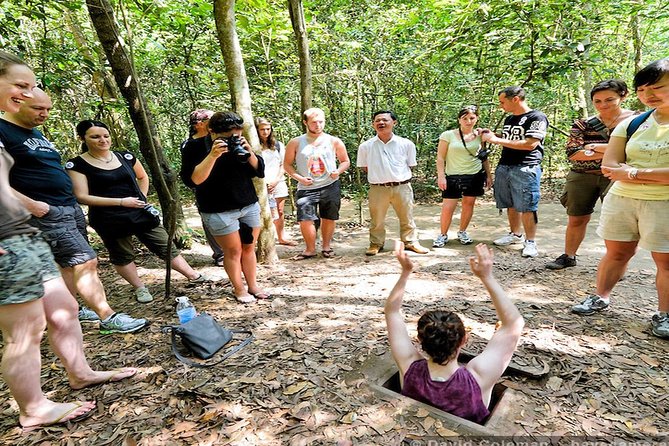
The most striking part of this half-day tour is the chance to enter the cramped tunnel system once used by Vietcong soldiers. You see how kitchens, bedrooms, hospitals, storage rooms, weapons workshops, and command posts were fitted below ground, then get a taste of wartime rations with tea and cassava.
I like that the $35 price includes transport and entrance fees, so the long trip from Ho Chi Minh City is simple to arrange. I also like the human touch: guides such as Son and Jimmy #10 add history and humor, while the shooting range gives the visit a more active edge. The main drawback is the road time. Cu Chi is about 43 miles from the city, and much of this six-hour outing is spent getting there and back.
Key points
- Enter a real tunnel section: See cramped passageways and underground spaces linked to kitchens, bedrooms, hospitals, storage rooms, and command posts.
- A guide-led history lesson: The introduction and film explain how the tunnels were built and how people survived wartime conditions.
- Transport is arranged: Pickup is offered, with the listed starting point at 112 Đ. Trần Hưng Đạo in District 1.
- Tea and cassava are included: The simple refreshment connects the site visit with the food available during the war.
- Optional shooting-range stop: You can try shooting at a nearby range as part of the experience.
- A manageable group size: The tour accepts no more than 30 people, which is useful for a guided site with narrow spaces.
Why the Cu Chi Tunnels Still Matter
The Cu Chi Tunnels are not simply an underground attraction. They are a physical record of how people lived and fought during the Vietnam War, often in conditions that are difficult to picture from a city museum or textbook.
You begin with a short introduction and a film about tunnel construction and survival. This preparation matters. Without it, the low entrances and dark passageways can feel like a strange curiosity. With it, you have a better sense of why the system was built and how many different needs it had to serve.
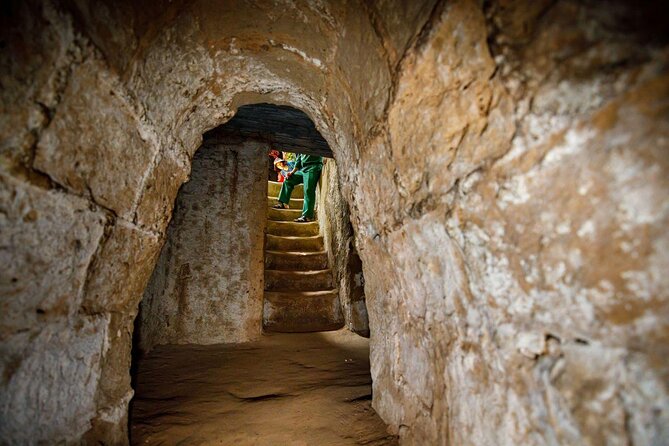
The tunnels included more than hiding places. Underground areas held kitchens, bedrooms, storage rooms, weapons factories, field hospitals, and command centers. That arrangement shows the scale of the system and the pressure on the people who lived there. It was a place for work, medical care, planning, cooking, and sleep, not just a route from one point to another.
I find the site most useful when you treat it as a lesson in survival rather than a war-themed amusement stop. The tour gives you a chance to think about how families and fighters shared the same confined spaces, and how long-term life underground demanded careful planning.
More luxury tours in Ho Chi Minh City:
- Cu Chi Tunnels & Mekong Delta Tour with VIP Limousine Transfer
★ 5.0 · 7,052 reviews - Cu Chi Luxury Group Tour – Tapioca and Cake Half Day
★ 5.0 · 3,375 reviews - Premium Cu Chi Tunnels Tour with Local Expert by SpeedBoat
★ 5.0 · 2,045 reviews
The 43-Mile Journey from Ho Chi Minh City
The road trip is part of the bargain. The Cu Chi area lies about 43 miles from Ho Chi Minh City, so you should expect a substantial portion of the six-hour tour to be spent in transport.
That distance is the main reason I would book an organized outing rather than try to arrange the visit alone. The tour bus and entrance arrangements are handled in advance, and pickup is offered. The listed meeting point is 112 Đ. Trần Hưng Đạo in Phường Phạm Ngũ Lão, District 1, and the activity ends back at that meeting point.
If you are staying elsewhere in the inner city, check the pickup details before you book. The description says direct hotel pickup is offered, but the formal meeting information also gives the District 1 address. Confirming the exact arrangement avoids an early-morning scramble.
The drive may feel long for a half-day tour, especially if you want to pack several other sights into the same morning or afternoon. Still, the road time is the cost of reaching the site. The included transport makes the trip much easier than finding your own way to the tunnels, and the fixed return keeps the day simple.
A group of up to 30 people can join. That is not a private tour, and you should not expect a quiet, custom-paced visit. It is a practical group outing, with enough structure to keep transport, admission, and the tunnel visit moving together.
The Introduction Film Sets the Scene
Before you explore the tunnel system, the guide gives a short introduction and shows a film about the construction of the tunnels and the people who survived there.
This is an important first step. The film gives you a basic map of the underground world before you encounter the preserved areas. It also explains the harsh wartime conditions that shaped daily life below ground.
Pay close attention to the practical details. The tunnel network supported living spaces as well as military functions, and the site includes examples of how those needs were placed side by side. Kitchens, bedrooms, field hospitals, command centers, weapons factories, and storage areas were all part of the larger system.
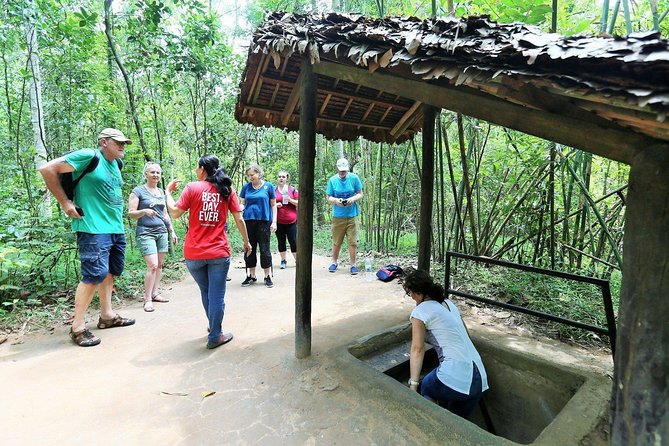
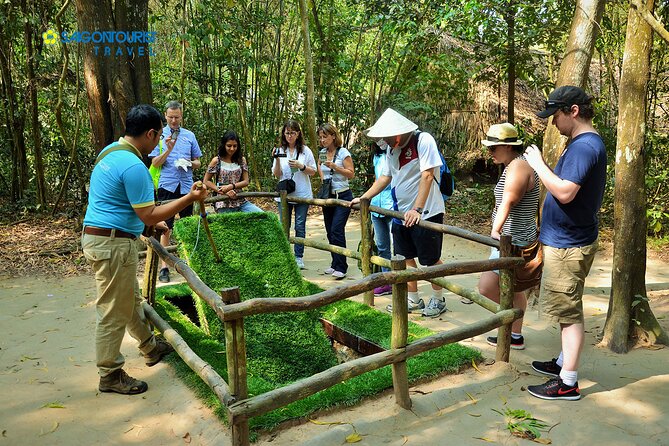
The introduction also helps you understand the defensive features. Hidden trap doors and dangerous traps were built into the area for security. These details can be disturbing, but they are central to understanding how the site functioned during wartime.
The guide’s role makes a real difference here. Son has been praised for giving clear information about Vietnam, while Jimmy #10 has been described as funny and effective at turning the history lesson into something more immediate. Guide assignments can change, so do not book on the assumption that one particular person will lead your group. Still, the experience clearly benefits from a guide who can explain the site without reducing it to a collection of odd underground rooms.
Entering the Tunnel System
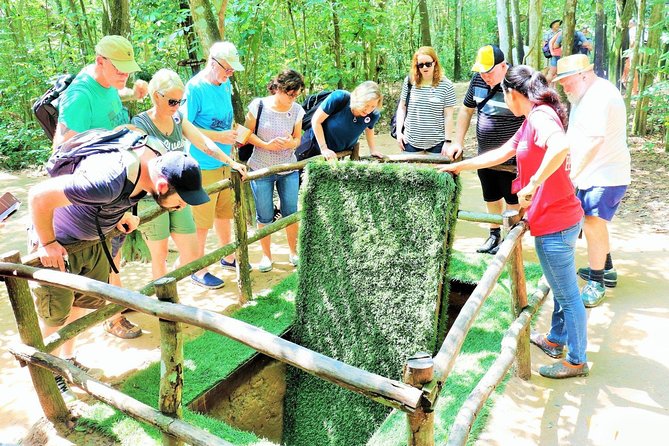
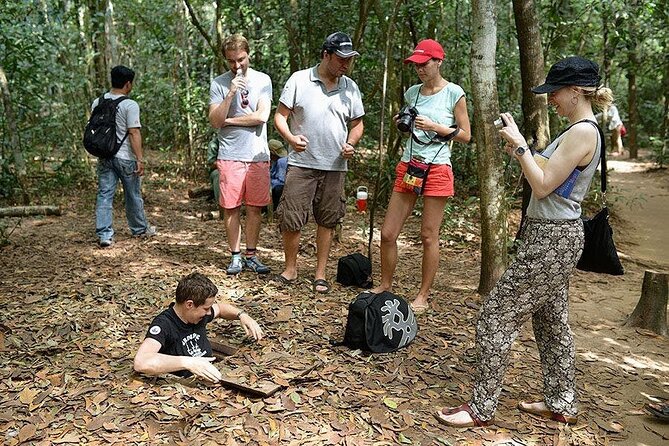
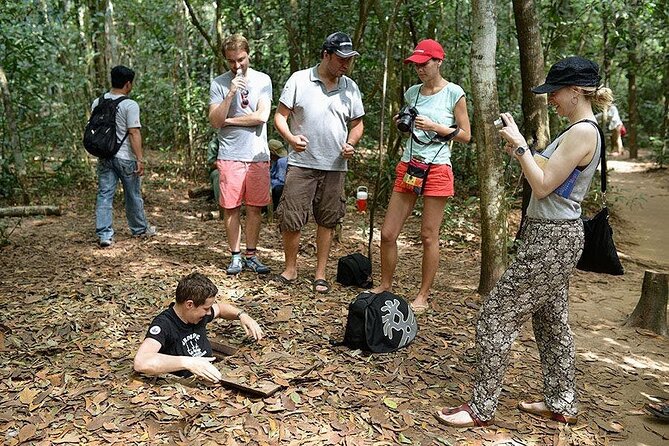
The main visit gives you time to explore the remaining tunnel areas and underground facilities. The most memorable feature is the physical scale. Tunnel spaces are cramped, and the experience gives you a direct sense of how difficult movement and daily life would have been below ground.
You may encounter living areas arranged around practical military functions. Kitchens and bedrooms sit near storage, weapons production, field hospitals, and command posts. The arrangement makes the site feel less like a single passage and more like an underground settlement designed to keep people alive and organized.
The visit is especially useful for showing how ordinary needs continued during war. Food had to be prepared, people needed medical treatment, supplies required storage, and commanders needed places to work. The tunnels brought all of those functions together in a confined setting.
The hidden doors and traps add another layer. They show that security was built into the physical environment, not handled only by people with weapons. You should listen carefully to the guide at these points, since the explanation of how the defenses worked is more valuable than simply seeing the mechanism.
This is not the sort of attraction where the best part is checking off a photo. The value comes from connecting the spaces to the lives that were lived there. The site can be eye-opening, but it also presents the realities of war in a direct way. If you prefer light sightseeing with little difficult history, this may feel intense.
Same destination, a different level of comfort:
- Cu Chi Tunnels Tour from HCM City – Morning or Afternoon
★ 5.0 · 15,833 reviews - Adventure Cu Chi Tunnels: Vietnam War Underground Network AM/PM
★ 5.0 · 2,726 reviews - HCMC: Cu Chi Tunnels & Mekong Delta VIP Tour by Limousine
★ 4.7 · 1,015 reviews - Cu Chi Tunnels and Mekong Delta – VIP Tour
★ 5.0 · 910 reviews
Tea, Cassava, and the Texture of Wartime Life
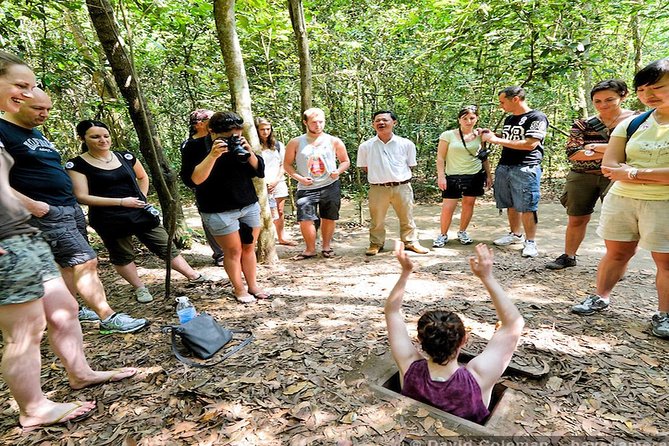
After the tunnel visit, refreshments include tea and cassava. The food is simple, but it gives the visit a useful sensory detail.
Cassava was an important source of food in the wartime setting represented at the site. Eating it after seeing the underground areas helps connect the history to daily survival. This is not a full meal, so plan your day with that in mind, but it is a relevant refreshment rather than a random snack.
The tea and cassava also slow the pace after the tunnel exploration. You have time to process what you have seen instead of rushing straight from the underground spaces to the bus.
I like this part because it adds context without turning the site into a performance. The focus remains on what people had available and how limited conditions shaped life. Keep your expectations modest: the refreshment is a historical touch, not a restaurant stop.
The Shooting Range Adds a Different Mood
The tour includes a chance to try shooting at a nearby range. This is one of the more unusual elements of the day, and it will appeal to some people more than others.
For some, the range gives the visit an active component after the history talk and tunnel walk. It may help you understand the weapons context that appears throughout the site. For others, the activity may feel uncomfortable beside a place associated with real wartime suffering.
I would treat the shooting range as optional in spirit, even though it is presented as a tour highlight. The Cu Chi Tunnels remain worthwhile without it. If you want the historical setting and the underground experience but have no interest in firing a weapon, focus on the tunnel visit, the guide’s explanation, and the wartime food.
The available information does not specify the range’s exact costs or firearm options. Ask the guide for those details before participating. That simple check keeps the $35 tour price clear, since the stated price covers transport and entrance fees but does not specifically explain every possible range charge.
What the $35 Price Gets You
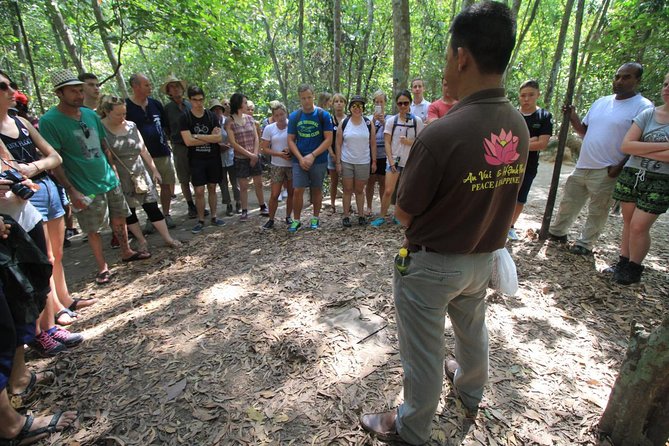
At $35 per person, this is a useful package for anyone who wants the Cu Chi Tunnels handled in one half-day outing. The stated price includes transport and entrance fees, which removes two common sources of hassle.
You also receive the guided introduction, the tunnel visit, and the tea and cassava refreshment. The tour adds the nearby shooting range opportunity and returns you to the starting point.
The value is strongest if you are staying in Ho Chi Minh City and want a straightforward visit without arranging transport yourself. A direct ride, included admission, and a guide make the price reasonable for a major historical site outside the city.
The value is less clear if you want private attention or a slow, highly personal tour. With a maximum of 30 participants, the outing is designed for a shared group. You are paying for convenience and a structured visit, not exclusivity.
Group discounts are offered, which may help if you are booking for several people. Mobile tickets also make the practical side easy. You can keep the ticket on your phone rather than carry printed paperwork.
The tour is booked about five days ahead on average. That suggests you should not leave it until the last minute if the Cu Chi Tunnels are important to your Ho Chi Minh City plans.
Who Should Book This Half-Day Tour?
I would recommend this experience to first-time visitors who want a clear introduction to the Cu Chi Tunnels without arranging a long journey on their own. It also suits anyone interested in military history, underground engineering, and the daily realities of wartime survival.
The format works well if you have only one day available for sights outside the city. The six-hour schedule leaves the rest of your day open, although the road journey means you should not expect the outing to feel short.
It is also a good fit for people who appreciate a guide who can connect physical places with human stories. Son and Jimmy #10 are named as guides associated with the experience, and both are linked with strong explanations and an engaging style.
I would think twice if you dislike confined spaces, difficult war history, or group tours. The tunnel areas are narrow, and the subject matter is serious. The road time may also frustrate you if you are looking for a quick attraction close to central Ho Chi Minh City.
Most participants can take part, and the activity is near public transportation. Still, the information does not give detailed mobility guidance for every tunnel section, so ask before booking if you have specific access needs.
My Booking Advice
Book this tour if you want the Cu Chi Tunnels explained rather than simply photographed. The combination of a guide, introductory film, preserved underground facilities, wartime food, and arranged transport gives you a fuller visit than a quick stop would.
The strongest parts are the history and the physical experience of the tunnels. The shooting range is an extra feature, not the reason I would choose the tour. The main tradeoff is clear: you give up a large part of the day to road travel and accept a group of up to 30 people.
At $35, that is a fair exchange for many visitors. Just confirm your pickup point, allow for the long drive, and approach the site as a serious war-history visit rather than a simple adventure activity.
FAQ
How long does the Cu Chi Tunnels tour last?
The tour lasts approximately six hours. The Cu Chi Tunnels visit itself is listed as four hours, with the remaining time covering transport and other tour arrangements.
How far are the Cu Chi Tunnels from Ho Chi Minh City?
The tunnels are approximately 43 miles from Ho Chi Minh City.
Does the tour include transport?
Yes. Transport costs are covered in the ticket price, and pickup is offered.
Where does the tour start?
The listed meeting point is 112 Đ. Trần Hưng Đạo, Phường Phạm Ngũ Lão, Quận 1, Ho Chi Minh City, Vietnam.
Where does the tour end?
The activity ends back at the meeting point.
Are entrance fees included?
Yes. Entrance fees are included in the ticket price.
Is food or drink provided?
Yes. Tea and cassava are provided after the tunnel visit.
Can I try shooting during the tour?
The experience includes the opportunity to try shooting at a nearby range.
How many people can join the tour?
The tour has a maximum group size of 30 participants.
Can I use a mobile ticket?
Yes. Mobile tickets are accepted, so you do not need to print your ticket.
Is the tour suitable for most people?
Most participants can take part, according to the activity information. The experience is near public transportation, but detailed access information for every tunnel area is not provided.
Can I cancel or change my booking?
No. The experience is non-refundable and cannot be changed for any reason.
Recently added around Ho Chi Minh City
- Vam Sat Mangrove Forest – VIP Private Tour★ 5.0 · 74 reviews
- Full-Day Tour in the Cu Chi Tunnels with a Luxury Speed Boat★ 5.0 · 164 reviews
- VIP Mekong Delta Adventure Cycling & Kayaking – Private Day Trip★ 5.0 · 179 reviews
- Cu Chi Tunnels – Half Day Morning or Afternoon Luxury Tours★ 4.5 · 213 reviews
- Ho Chi Minh City: Cu Chi Tunnels Ben Duoc VIP Limousine Tour★ 4.8 · 270 reviews
- Authentic Mekong Delta Tour With Local Experts By SpeedBoat★ 5.0 · 271 reviews
- From Ho Chi Minh City: Mekong Delta VIP Tour by Limousine★ 4.5 · 292 reviews
- Mekong Delta Full Day Trip – My Tho & Ben Tre – VIP Private Tour★ 5.0 · 371 reviews
Ho Chi Minh City Luxury Tours, compared.

Cu Chi Tunnels & Mekong Delta Tour with VIP Limousine Transfer
Read our review →
Adventure Cu Chi Tunnels: Vietnam War Underground Network AM/PM
Read our review →
Premium Cu Chi Tunnels Tour with Local Expert by SpeedBoat
Read our review →
HCMC: Cu Chi Tunnels & Mekong Delta VIP Tour by Limousine
Read our review →


From Ho Chi Minh: Cu Chi Tunnels and VIP Speedboat Tour
Read our review →
Morning CuChi Tunnels-Tapioca-Secret Traps Luxury Speedboat 2Ways
Read our review →Browse the lists this tour appears in