
Review · FRANCE
Luxury Tour of Château de La Dauphine
Château de La Dauphine gives you more than a quick wine tasting. In about an hour to an hour and a half, you move from an 18th-century château linked to the French royal family to the vineyard and then into striking modern wine cellars. The visit finishes with three wines from the estate, so you can connect the place, the farming, and the glass.
I like the clear progress of the tour, from soil to bottle, and I like the mix of old and new. Guides such as Gaspard and Carissa have explained the vineyard, biodynamic methods, barrels, and winemaking in a friendly, easy-to-follow way. The main consideration is timing: the tour is short, and the fixed opening window runs from 9:30 a.m. to 3:30 p.m., so you need to plan your Fronsac visit around it.
Key points at a glance
- Royal connection: Visit the house where Marie-Josèphe de Saxe, Dauphine of France and mother of Louis XVI, stayed.
- Three-part route: Walk through the park and house, see the vineyard, then visit the technical wine buildings.
- Biodynamic farming: Learn how the 66-hectare estate makes plot-by-plot choices in its organic and biodynamic vineyard.
- Modern cellar design: See the unusual circular arrangement of the fermentation tanks and learn how the wines are made.
- Three estate wines: Taste Château de La Dauphine and Delphis de La Dauphine among the wines presented.
- Good value: At $17, the tour includes the full visit and tasting, not just a glass at the door.
A Fronsac estate with a royal name
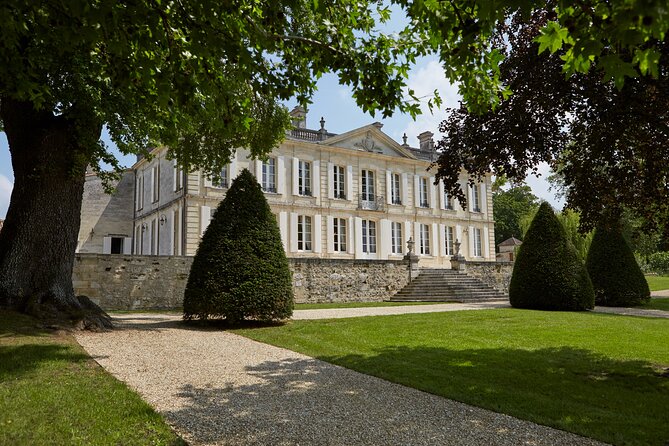
Fronsac sits in the Bordeaux wine region, in an area shaped by the Dordogne and by centuries of political power. The estate’s name recalls Marie-Josèphe de Saxe, known as the Dauphine of France, who stayed here. She was the mother of France’s last kings, including Louis XVI.
That connection gives the château more weight than a simple vineyard stop. You are not only looking at a wine property. You are also seeing a country house tied to the old French court, in a wine area that once held a very high place in the kingdom’s wine trade.
I appreciate that the historical portion is part of the main route rather than an optional extra. You begin with the setting and the building, then see how the estate functions today. That order makes the tasting more meaningful because you understand where the wine comes from before it reaches your glass.
The house itself is an important part of the appeal. It is described as an 18th-century château, and the visit includes its interior rather than limiting you to the garden or shop. The grounds also create a graceful first impression, with vines reaching close to the château and the park offering a change from the more technical parts of the visit.
More luxury tours in France:
- Nice: Orange Bar Crawl with 5 Free Shots & VIP Club Entry
★ 4.6 · 959 reviews - Nice: Ultimate Party Bar Crawl Free Shots & VIP Club Entry
★ 4.3 · 628 reviews - Seine River Dinner Cruise with Live Singer by VIP Yacht de Paris
★ 4.0 · 604 reviews
From the park to the château interior
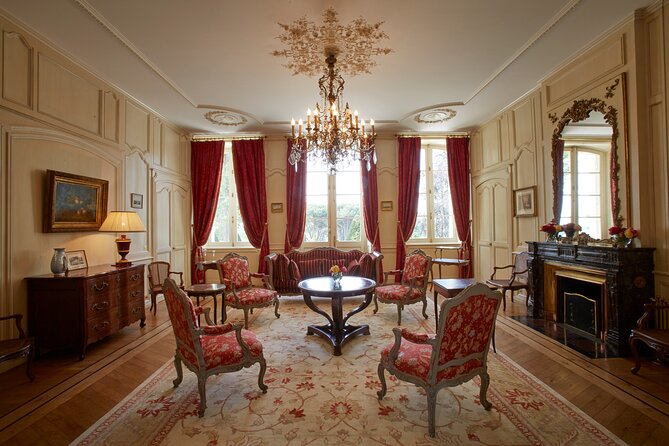
The opening part of the experience takes you through the park and inside the château. This is the most traditional section of the tour, and it suits anyone who enjoys architecture, old estates, and a little royal context along with wine.
Your guide provides the historical background while showing you the rooms and character of the building. The supplied details do not list every room or furnishing, so do not book this expecting a long museum tour packed with objects. Think of it as a concise introduction to the estate and the person connected to its name.
This portion also works well for people in a mixed group. Wine experts can listen for details about the property, while companions who care more about French history or beautiful buildings still have something to enjoy. One visitor even chose the château as the setting for a marriage proposal, which says something about the atmosphere of the grounds, though proposals are not part of the standard tour.
The house is also useful as a point of contrast. The old building reflects the estate’s past, while the later cellar visit shows how the property operates now. That shift is one of the strongest features of the experience.
Seeing a 66-hectare organic and biodynamic vineyard
After the house, the focus moves outdoors to the vineyard and to the estate’s environmental approach. Château de La Dauphine covers 66 hectares and describes its vineyard as BIO and BIODYAMIE, meaning organic and biodynamic methods guide the work.
The tour treats this as more than a marketing label. You hear about choices made plot by plot, with attention to the character of different sections of the vineyard. The guide may also explain the soil, an aspect that Gaspard was especially praised for making clear. That matters in Bordeaux, where small differences in soil and exposure help shape the character of the finished wine.
You will not get an agricultural course in an hour, but you should leave with a better sense of why vineyard work affects the bottle. The useful idea here is that the estate does not treat all 66 hectares as one uniform field. Its working philosophy favors close attention to detail, both in the vines and in the cellar.
This part is particularly worthwhile if you are curious about sustainable wine production. The tour explains the estate’s environmental choices without separating them from the practical business of making wine. You see how farming decisions connect to fermentation, aging, and the final tasting.
The season will affect what you see outdoors. The supplied opening period runs from November 1, 2024, through October 31, 2025, so the appearance of the vines will vary. Bring sensible footwear for a vineyard visit, although the exact walking conditions are not specified.
A modern cellar arranged in a surprising way
The technical buildings are where Château de La Dauphine feels most different from a standard Bordeaux château visit. The estate uses modern facilities to produce two main wines, Château de La Dauphine and Delphis de La Dauphine.
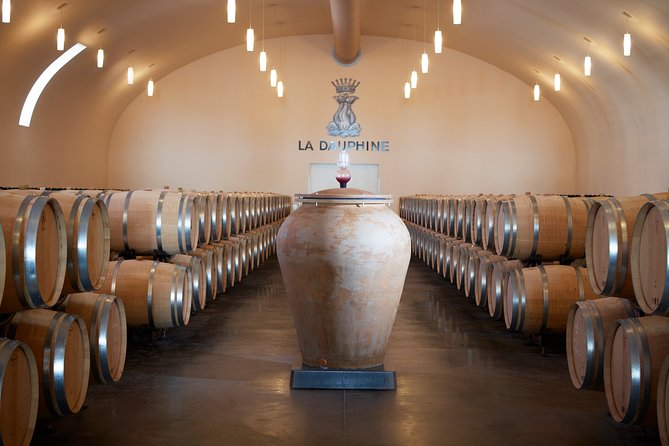
The cellar includes fermentation tanks arranged in a cupola, or circular dome-like layout. That design is one of the details worth remembering. It gives the working buildings a strong visual identity and shows that the estate has invested in more than a handsome façade.
Your guide also explains the vats and barrels. Gaspard, for example, walked visitors through the different barrels and the role they play in the process. Carissa has also led the tour in clear English, covering the château, vineyard, and modern winemaking operation.
This part is a good reason to choose the full tour instead of a simple tasting. A tasting alone tells you what is in the glass. The cellar visit helps explain why the wines taste the way they do, from the handling of the grapes to the use of different vessels and aging methods.
At the same time, keep your expectations realistic. The technical visit is included within a 60 to 90 minute experience, so explanations must stay focused. You will get a practical overview, not a long professional wine course or a detailed tour of every production stage.
Same destination, a different level of comfort:
- Nice: Pub Crawl Yellow – Social Bars, Games & VIP Club Entry
★ 5.0 · 326 reviews - Riviera Bar Crawl Party with Free Shots and VIP Entry
★ 4.5 · 323 reviews - Versailles: Entry ticket & Private Apartments VIP Tour
★ 4.4 · 298 reviews - Catacombs of Paris Semi-Private VIP Restricted Access Tour
★ 5.0 · 288 reviews
The three-wine tasting
The final part is a tasting of three wines from the estate. It usually takes place in the château shop or tasting area, according to the visit details provided. The wines include selections from the estate’s two labels, Château de La Dauphine and Delphis de La Dauphine.
Three wines is a sensible number for a short tour. You have enough glasses to compare the estate’s style without turning the visit into a marathon. The earlier discussion of soil, farming, vats, and barrels gives you useful points to consider as you taste.
I would pay attention to how the wines differ rather than simply deciding which one you like best. Ask your guide how each wine relates to the vineyard plots, production methods, and aging. The available information does not specify the exact vintage or tasting lineup, so the selection may change.
The tasting also makes the $17 price easier to assess. You are paying for access to the property, the house, the vineyard explanation, the technical buildings, the guide, and three wines. For someone already visiting the Fronsac area, that is a strong package at a modest price.
You can also buy bottles after the tasting. Several comments describe people leaving with wine, and one person planned to look for the estate’s bottles through a distributor in the United States. If you find a wine you like, ask about availability at home before buying a large quantity.
How the guides shape the experience
A short wine tour depends heavily on the guide. Here, the names that come up are Gaspard and Carissa. Gaspard is associated with explanations of vineyard soil, the château, vats, and barrels. Carissa has led tours in English and received praise for making the history and wine production easy to follow.
The tour has also been conducted in Spanish, with the full route covering the interior of the château, the facilities, the vineyard, and a three-wine tasting. French is naturally part of the local setting, and the available comments include both French and translated accounts.
You should confirm the language when booking if it matters to you. The information confirms that English and Spanish visits have taken place, but it does not provide a fixed daily language schedule.
The tone seems friendly rather than formal. A French-language visit was praised for its warm welcome and clear explanations of biodynamics. Another visit included a group with children, and the guide was described as patient and clear. That suggests the experience can work for a mixed-age group, though the tasting remains the main focus for adults.
Who will get the most from this tour
I would choose this experience if you want a compact introduction to Fronsac that combines several subjects:
- Bordeaux wine and the Fronsac appellation
- French château architecture
- Royal history
- Organic and biodynamic vineyard work
- Modern cellar design
- A three-wine tasting
It is a good fit for first-time wine visitors because the route follows a logical path. You do not need to arrive with advanced wine knowledge. The guide fills in the basics and gives you enough context to taste with more confidence.
It also suits people who have already visited several Bordeaux estates and want something a little different. The circular cellar layout and the estate’s attention to biodynamic farming give the visit its own character.
Families can take part, and most people can participate according to the supplied booking information. Still, wine tasting is the center of the experience, so children may care more about the château and grounds than the cellar explanations.
This is not the best choice if you want a long, slow day at a vineyard, an elaborate meal, or a private luxury tasting with extensive food pairings. The title uses the word luxury, but the experience is a concise estate tour at a low price, not a full-day high-end wine package.
Timing, price, and practical planning
The stated price is $17, and the visit lasts about one hour to one hour and 30 minutes. That makes it easy to fit into a day of exploring Fronsac or nearby Bordeaux wine country.
The opening hours listed for November 1, 2024, through October 31, 2025, are 9:30 a.m. to 3:30 p.m., Monday through Sunday. Since the final start times are not specified, allow enough room for the tour itself and arrive with time to spare.
A mobile ticket is provided, which is convenient if you are moving between several wine estates. Confirmation is sent within 48 hours of booking, subject to availability, so do not assume the reservation is final until you receive it.
The experience is non-refundable and cannot be changed after booking. This makes it especially important to check your date, language needs, and schedule before paying. The low price is attractive, but the strict booking terms remove flexibility.
No transport service is described, so you should arrange your own way to the château. The supplied information identifies the location as France and the estate as being in Fronsac, but it does not provide a shuttle, pickup point, or detailed public transport instructions.
The best parts, and the limits
The strongest feature is the complete path through the estate. You see the old house, walk among the vines, hear about environmental methods, enter the production buildings, and taste the result. That gives you a fuller picture than a tasting-room stop.
The second strength is the contrast between heritage and modern production. The royal connection and 18th-century interiors provide atmosphere, while the cupola-style cellar and modern technical buildings keep the visit grounded in present-day winemaking.
The guides are another plus. Gaspard and Carissa are specifically associated with clear, friendly explanations, and the tour has worked well in English and Spanish as well as French.
The limitations are simple. The tour is brief, the tasting lineup can vary, and the opening hours may not suit a late afternoon wine stop. You also need to accept the non-refundable policy and arrange your own transportation.
Should you book Château de La Dauphine?
Yes, if you want good value and a well-rounded Fronsac visit in under 90 minutes. At $17, you receive much more than a tasting: royal history, château interiors, vineyard practices, modern cellar design, and three wines.
I would especially recommend it to first-time visitors, couples looking for a scenic estate, and wine drinkers interested in organic or biodynamic farming. It is also a smart pick if you want a shorter stop that still feels substantial.
Skip it only if you want a long private tasting, a meal, or a flexible booking you can change later. For everyone else, check the language and time before booking, then set aside enough room to enjoy the house, vineyard, cellar, and tasting without rushing.
FAQ
How long does the Château de La Dauphine tour last?
The experience lasts approximately one hour to one hour and 30 minutes.
What does the tour include?
It includes the park, the interior of the 18th-century château, the vineyard, the technical buildings, an explanation of the estate’s environmental approach, and a tasting of three estate wines.
How many wines are included?
You taste three wines from Château de La Dauphine.
What wines does the estate produce?
The estate produces Château de La Dauphine and Delphis de La Dauphine.
Is the tour available in English?
English-language tours have been offered. The guides named in the available information include Gaspard and Carissa.
Is the tour available in Spanish?
A Spanish-language visit has been offered and included the château interior, facilities, vineyard, and tasting of three wines. Confirm the language when booking because a daily schedule is not provided.
When is the estate open?
For the listed period from November 1, 2024, through October 31, 2025, it is open Monday through Sunday from 9:30 a.m. to 3:30 p.m.
Can I cancel or change the booking?
No. The experience is non-refundable and cannot be changed for any reason after booking.
Recently added around France
- Maison Noilly Prat VIP tour, wine and vermouth tastings★ 4.5 · 134 reviews
- Private luxury tour of Bordeaux in a magnificent Citroen DS – 2 hours★ 5.0 · 6 reviews
- A day in Saint-Emilion in a small group (Electric Luxury Van)★ 5.0 · 9 reviews
- WW2 VIP landing beaches tour – half day★ 5.0 · 6 reviews
- Luxury Luxury Wine Tour Experience★ 5.0 · 69 reviews
- Safari 4×4 in Camargue / VIP Tour 3h30 / Grau du Roi★ 4.6 · 52 reviews
- Lyon: Riviera Bar Crawl Party with Free Shots and Vip Entry★ 4.6 · 7 reviews
- Private Champagne Ruinart, Moet Chandon VIP Tour by Mercedes★ 4.7 · 6 reviews
France Luxury Tours, compared.

Ultimate Party Bar Crawl Free Shots & VIP Club Entry
Read our review →
Seine River Dinner Cruise with Live Singer by VIP Yacht de Paris
Read our review →
Pub Crawl Yellow – Social Bars, Games & VIP Club Entry
Read our review →
Riviera Bar Crawl Party with Free Shots and VIP Entry
Read our review →
Catacombs of Paris Semi-Private VIP Restricted Access Tour
Read our review →

Normandy Battlefields D-Day Private Trip with VIP Services from Paris
Read our review →Browse the lists this tour appears in