
Review · CAIRO
Private 11-Days Egypt Spiritual Tour and Luxury Sacred Journey
Egypt’s ancient monuments take on a different meaning on this 11-day private journey, which links major temples and tombs with a spiritual program built around chakras, healing, rebirth, and personal reflection. You travel from Cairo to Aswan, sail north on the Nile, then return to the pyramids and old religious sites of Cairo.
I like the private transport and guide, which remove much of the usual guesswork in Egypt. I also like the mix of major sights and less familiar places such as Dendera and Abydos. The main consideration is the pace: flights, long road transfers, early starts, and full sightseeing days leave little room for unplanned wandering.
Key points to know before you book
- A complete Egypt route: Cairo, Aswan, Abu Simbel, Kom Ombo, Edfu, Luxor, Dendera, Abydos, Saqqara, Giza, and historic Cairo all fit into 11 days.
- Three nights on a luxury Nile cruise: You sail between Aswan and Luxor while visiting river temples along the way.
- A private Egyptologist guide: Guides such as Ahmed, Haris, Mohamed, and Mostafa are named in the experience feedback, though your assigned guide can vary.
- Spiritual themes at major sites: The program connects temples with chakra centers and includes meditation inside the Great Pyramid’s King’s Chamber.
- Luxury logistics: Domestic flights, private air-conditioned vehicles, upscale hotels, meals, bottled water, and airport assistance are included.
- A strong service focus: Airport greetings, 24-hour support, a free SIM card with 7GB of data, and help at each transfer make this a good fit if you prefer organized travel.
Why this Egypt spiritual journey works
The smartest feature here is the route. Instead of using Cairo as a base for a few famous monuments, you move through the Nile Valley in a logical arc. You begin with Aswan, travel by ship toward Luxor, then return to Cairo for the pyramids and museums.
That order matters. Aswan gives you a quieter start, with a sunset felucca ride and the graceful Temple of Philae. The Nile cruise then turns transport into part of the trip. By the time you reach Cairo, you have seen temples, tombs, ancient cities, and religious sites from several periods of Egyptian history.
I especially like that the trip includes Abu Simbel, Dendera, and Abydos, not just the standard Cairo and Luxor checklist. These places add long drives and a busy schedule, but they also give you a broader look at Egypt’s sacred architecture.
The spiritual language is central to the experience. Aswan is associated with a root chakra, Kom Ombo and Edfu with the navel chakra, Karnak and Luxor with the solar plexus, Dendera with the heart, Saqqara with the throat, and the Great Pyramid with the third eye. This is a modern spiritual interpretation of ancient sites, not the standard academic reading of Egyptian religion. If you enjoy meditation and symbolic connections, it adds a personal layer. If you prefer strictly archaeological commentary, you should treat it as an optional framework rather than established ancient Egyptian belief.
More luxury tours in Cairo:
- VIP All inclusive Best of the best Giza Pyramids,Sakkara,Memphis
★ 5.0 · 3,164 reviews - Private ViP all-inclusive Giza Pyramids,Sphinx,Inside Pyramid
★ 5.0 · 2,448 reviews - VIP Meet and Greet Private Hotel Transfer from Cairo Airport
★ 5.0 · 1,026 reviews
Days 1 and 2: Cairo arrival, Aswan, Philae, and the Nile at sunset
Your arrival is handled at Cairo International Airport, where a representative meets you and escorts you to the Le Meridien Cairo Airport Hotel. This first night is practical rather than cultural. It gives you a comfortable place to sleep before the domestic flight south.
After breakfast on Day 2, you fly to Aswan. Airport assistance continues on arrival, followed by a visit to the Temple of Philae. The temple is dedicated to Isis, a major figure connected with motherhood, love, and peace. The complex was moved to higher ground after the construction of the Aswan High Dam, an important detail that makes the site more than a collection of beautiful columns.
The spiritual program presents Aswan as a place of renewal and new beginnings. You can appreciate that theme while still paying attention to the carvings, courtyards, and island setting.
In the afternoon, you board a felucca, the traditional Nile sailboat, for about an hour at sunset. This is one of the lighter parts of the itinerary. After several hours of temple visits and transfers, the slow movement of the boat gives you time to watch the river and settle into the trip.
You spend the night at a five-star Aswan hotel. The schedule is comfortable, but the short flight and sightseeing make this a full first day.
Day 3: Abu Simbel and your first night on the cruise
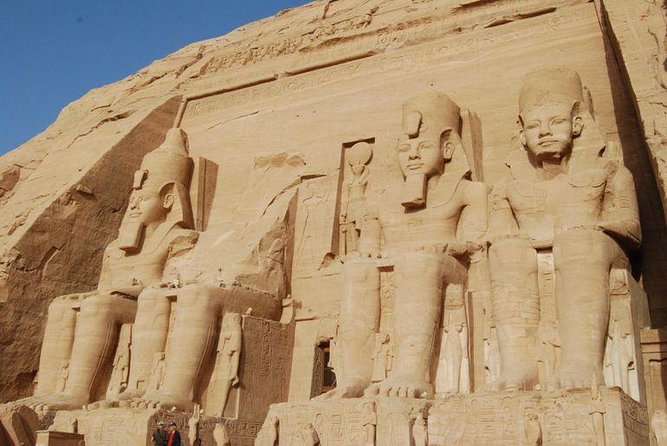
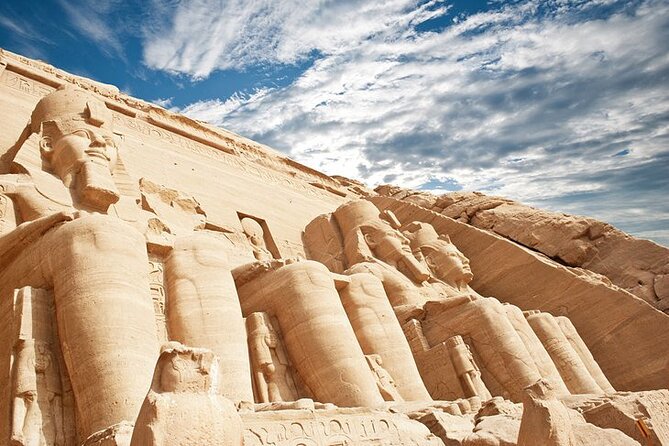
Abu Simbel requires a private road journey from Aswan, but it earns its place on the itinerary. Ramesses II commissioned the two temples as a monument to himself and Queen Nefertari. The enormous seated figures cut into the mountainside are among Egypt’s most memorable sights.
You have about three hours at the complex before returning to Aswan. That timing gives you enough space to see the major interiors and facades, though the road journey makes this a demanding day. Wear comfortable shoes, carry water, and protect yourself from the sun.
Back in Aswan, you board the five-star Nile cruise for three nights. The cruise is more than a hotel that happens to move. It reduces the need to repack and gives you river views between sightseeing stops. Meals are arranged onboard, and the included plan covers seven dinners, ten breakfasts, and nine lunches across the full trip.
Days 4 and 5: Kom Ombo, Edfu, Karnak, and Luxor Temple
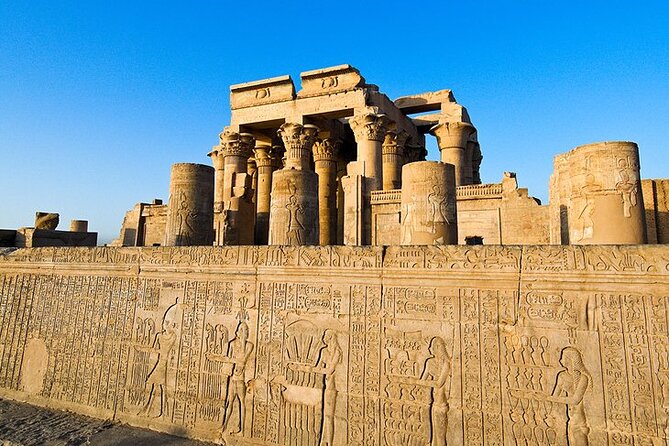
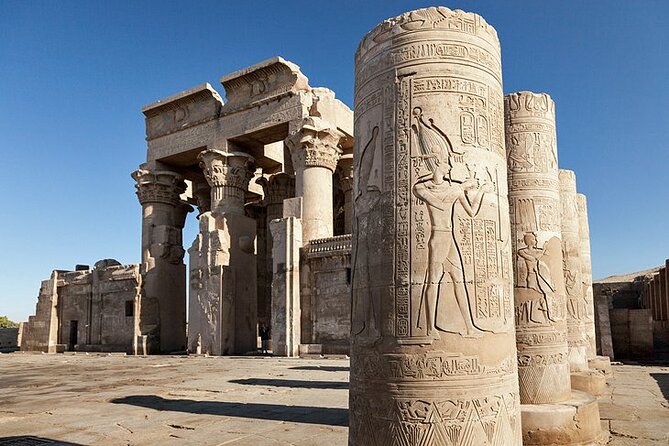
The cruise heads north toward Kom Ombo, where you visit a temple with an unusual double dedication. One side honors Sobek, the crocodile god, while the other is linked with Horus, the falcon god. The spiritual interpretation uses this pairing to represent lower and higher aspects of the self, along with the effort to release fear and negativity.
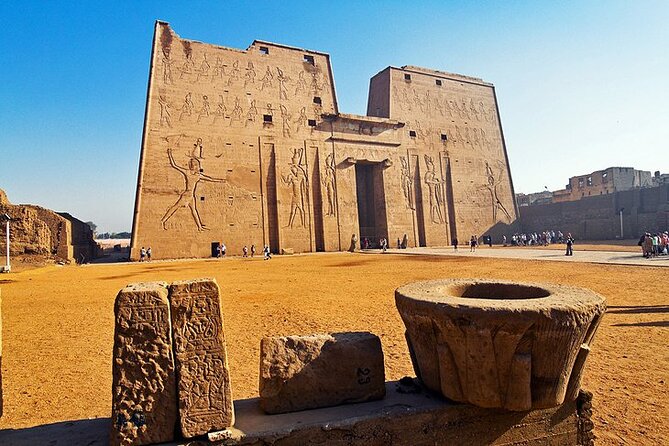
You then continue to Edfu Temple, dedicated to Horus. The temple is among the best-preserved major temples in Egypt, and its walls tell the myth involving Isis, Osiris, Horus, and Seth. The visit is followed by lunch and more sailing.
On Day 5, the focus shifts to Luxor. Karnak is vast, and three hours is useful here. The complex includes great halls, processional spaces, columns, obelisks, and sanctuaries built over many centuries. The itinerary gives special attention to the sanctuary of Sekhmet, the lioness goddess associated with war and healing, and includes access through the seven gates described in the program.
This is also the point where the spiritual approach is most pronounced. Karnak is presented as a solar plexus center and a symbolic model of the universe. You can listen to the spiritual explanation while also asking your guide about the site’s changing political and religious roles.
Luxor Temple follows, with about two hours on site. Its statues, columns, and open courtyards are especially striking late in the day. The temple is connected to the human body and its energy centers in the tour’s presentation.
The cruise ends after this sightseeing day. The schedule gives you plenty of major monuments, but not much free time in Luxor itself.
Same destination, a different level of comfort:
- Luxury Felucca on the Nile with Lunch
★ 5.0 · 994 reviews - Best ViP Private Tour Giza Pyramids,Sphinx, inside Pyramids
★ 5.0 · 448 reviews - Cairo VIP Guided Tour to Khan El-Khalili Market with Lunch
★ 5.0 · 431 reviews - VIP Giza Pyramids, Sphinx, Lunch,Camel Ride & inside 3rd pyramid
★ 5.0 · 397 reviews
Day 6: Valley of the Kings, Tutankhamun, and Hatshepsut
After breakfast, you leave the cruise and visit Luxor’s west bank. The Valley of the Kings served as a burial area for pharaohs and powerful nobles during the New Kingdom. Your entry includes the valley, plus the tomb of Tutankhamun, known as KV62.
Tutankhamun’s tomb is small compared with some of the grander royal tombs, but its importance comes from its discovery and the treasures associated with it. The scheduled visit lasts about 20 minutes, so you should keep expectations realistic. This is a focused stop, not a long, quiet exploration.
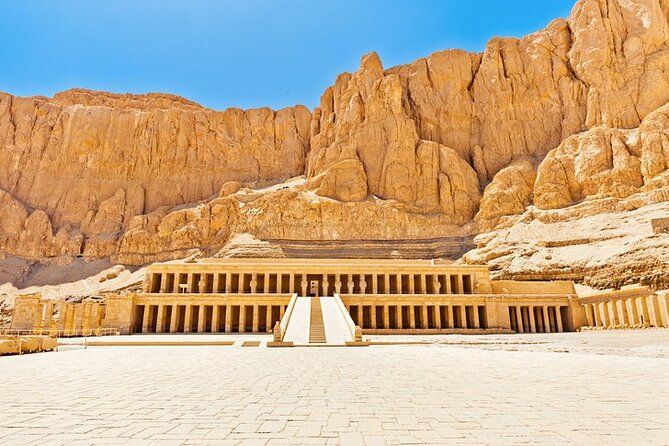
The Temple of Hatshepsut follows. Its terraces rise against the cliffs, and its design differs sharply from the underground tombs. The temple honors Hatshepsut and Amun-Ra, and its setting makes it one of the most visually distinctive places around Luxor.
You also stop at the Colossi of Memnon, two enormous stone figures that once guarded a temple complex. The visit lasts about 20 minutes, followed by lunch at a local restaurant and hotel check-in in Luxor.
This day is packed. The good news is that the major west-bank sights are grouped together. The tradeoff is that you will spend much of the day walking, standing, and listening in the heat.
Day 7: Dendera and Abydos, the trip’s less usual highlights
A private vehicle takes you north from Luxor to Dendera Temple. The journey adds road time, but Dendera is one of the best-preserved temple complexes in Egypt. Its Temple of Hathor is known for its decorated columns and ceiling reliefs, and the tour links the site with the heart chakra.
This is a particularly good day for anyone who wants more than the standard ancient Egypt route. Dendera has a different feel from Karnak and Luxor, with a more contained complex and strong visual detail.
You then continue to Abydos and the Osireion. Abydos was one of ancient Egypt’s sacred cities and was closely tied to Osiris, the god associated with death, renewal, and rebirth. The Osireion is presented as a place of healing and transformation within the spiritual program.
The return to Luxor includes lunch and another hotel night. Expect a long day in the vehicle. I consider this worthwhile because Dendera and Abydos provide some of the itinerary’s most distinctive content, but it is not the day to plan a relaxed afternoon.
Day 8: Back to Cairo and the Mena House setting
After breakfast, you fly from Luxor to Cairo. Airport transfers and assistance are included, which is useful after several days of road travel and cruise schedules.
You stay at the Marriott Mena House Hotel, a luxury property near the Giza pyramids. The afternoon is free, a welcome pause after the previous days. Use it to rest, organize photos, or enjoy the hotel rather than trying to add another major sight.
The contrast between the Nile Valley and Cairo is sharp. Aswan and Luxor feel tied to the river and archaeological sites. Cairo is larger, busier, and more urban. Having a free period before the final sightseeing days helps you handle that change.
Day 9: Saqqara, Giza, the Sphinx, and the King’s Chamber
Saqqara is the first major stop. The site is associated with the Step Pyramid of Djoser and the development of pyramid architecture, though the program’s spiritual focus centers on Thoth, the god of wisdom, knowledge, and communication.
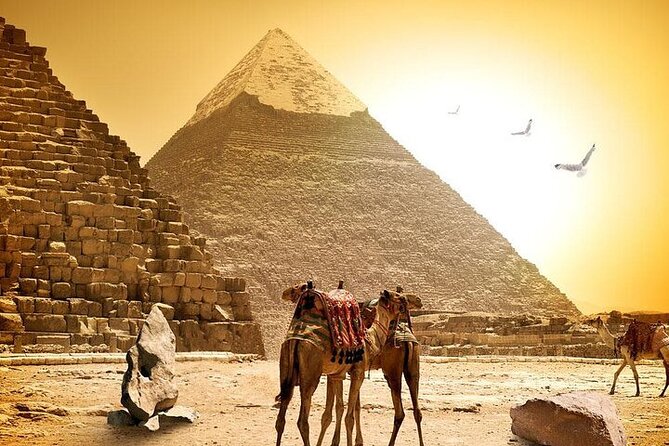
You then visit the Giza pyramids. The itinerary specifically includes the King’s Chamber inside the Great Pyramid of Khufu, along with a healing meditation there tied to the third-eye concept. This is an unusual addition to a standard pyramid visit.
The interior visit is physically demanding. You may find narrow passages, steep sections, and limited space. The spiritual session is the point of this experience, so it suits you best if you are comfortable combining a major archaeological monument with guided meditation.
After lunch at a local restaurant, you visit the Great Sphinx for about 30 minutes. The Sphinx is connected with the soul chakra in the program. The stop is brief, but it gives you time for the classic view and a closer look at the monument.
This is one of the busiest days of the tour, yet it covers the sights most people associate with Egypt. Private transport helps because you can move between Saqqara and Giza without arranging taxis or negotiating each journey yourself.
Day 10: Egyptian antiquities, the Citadel, and Cairo’s Christian quarter
The Egyptian Museum is scheduled for three hours. Its collection includes major Pharaonic objects and treasures connected with Tutankhamun. Your Egyptologist guide helps give order to a very large collection, which is important because it is easy to lose the thread in a museum of this scale.
Next comes the Mosque of Muhammad Ali, also called the Alabaster Mosque, inside the Cairo Citadel. The Ottoman-era design, high position, and broad city views give you a change of rhythm after days of tombs and temple reliefs.
The final visits are in Cairo’s Coptic quarter. The Hanging Church is dedicated to the Virgin Mary, and Abu Serga Church is traditionally associated with the Holy Family’s time in Egypt. These sites connect the trip with living religious traditions rather than only ancient monuments.
The schedule lists both the Hanging Church and St. Sergius and Bacchus Church separately, though the second name refers to Abu Serga. Together, they make a useful closing chapter to the journey, showing how Egypt’s sacred identity continued long after the pharaohs.
What the $3,648 price includes
At $3,648 per person, this is not a budget tour. The value comes from how much is bundled into the price: four Cairo hotel nights, one Aswan hotel night, two Luxor hotel nights, three nights on a luxury Nile cruise, domestic flights, private vehicles, airport help, entry fees, meals, bottled water, and a private Egyptologist guide.
You also receive a SIM card with 7GB of data and 24-hour on-call support. Those details may seem minor, but reliable communication and help with transfers can make a real difference in Egypt.
International flights, the entry visa, extra drinks and meals, and tips are not included. You should also budget gratuities for guides, drivers, and cruise staff.
I see the price as reasonable for a private luxury program covering this much ground. A lower-cost group tour may reduce the price, but you would give up some control, privacy, and personal assistance. The strongest value here is convenience, not simply hotel quality.
Who should book this tour
I would choose this trip if you want Egypt’s major sights with a private guide and little day-to-day planning. It is also a good fit if you are drawn to meditation, energy work, symbolic interpretation, and the idea of connecting ancient places with personal renewal.
The program has earned especially strong praise for attentive airport handling, guide support, hotel arrangements, food accommodations, and a feeling of security. Gluten-free meals were handled for at least one participant, but you should still state dietary needs before departure.
I would hesitate if you want long free periods, independent exploration, or a strictly archaeological presentation. The itinerary is full, and the chakra framework may not suit you. You should also be comfortable with several flights, road journeys, early starts, and substantial walking.
Free cancellation is available up to 24 hours before the start time. The tour begins at Cairo International Airport and is private for your group.
Should you book it?
Book this Egypt spiritual tour if you want a polished, closely managed journey that combines ancient sites with a personal spiritual program. The route is unusually complete, and the private format makes a complicated country easier to handle.
Choose another style of trip if you want to linger in markets, set your own pace, or focus only on conventional Egyptology. For everyone else, this is a strong choice for seeing the Nile Valley, Cairo, and the pyramids in one well-supported 11-day trip.
FAQ
How long is the Egypt spiritual tour?
The tour lasts approximately 11 days, beginning with pickup at Cairo International Airport and ending with transfer back to the same airport.
Is this a private tour?
Yes. The activity is private, and only your group participates. Private air-conditioned vehicles and a private Egyptologist guide are provided throughout the trip.
What accommodation is included?
The package includes four nights in a five-star Cairo hotel, one night in a five-star Aswan hotel, two nights in a five-star Luxor hotel, and three nights on a five-star luxury Nile cruise.
Are domestic flights included?
Yes. The flights from Cairo to Aswan and from Luxor back to Cairo are included.
Does the tour include entry to the Great Pyramid’s King’s Chamber?
Yes. Entry to the King’s Chamber at the Great Pyramid is included, along with a healing meditation connected with the tour’s third-eye theme.
What is not included in the price?
International flights, Egypt’s entry visa, meals and drinks not listed in the package, and gratuities for guides, drivers, cruise staff, and others are not included.
Recently added around Cairo
- VIP Shopping Private Tour Papyrus Perfume Bazaars and Cotton★ 5.0 · 22 reviews
- VIP Private Tour Giza Pyramids ,Sphinx , Quad Ride, Camel Ride★ 5.0 · 26 reviews
- Luxury Full Day Egyptian Museum, Coptic Cairo and Islamic Mosque★ 5.0 · 24 reviews
- Private VIP Tour to Giza Pyramids Sphinx And the Egyptian Museum★ 5.0 · 17 reviews
- VIP Pyramids tour, Camel Ride, Museum, and Khan +local meal★ 5.0 · 14 reviews
- VIP Giza Pyramids,Sphinx, Camel ride, lunch & inside 3rd pyramid★ 5.0 · 30 reviews
- VIP Pyramids of Giza,Sphinx,sakkara,Memphis tour + camel ride★ 5.0 · 13 reviews
- VIP Day Tour inside Giza Pyramids★ 4.5 · 8 reviews
Cairo Luxury Tours, compared.
VIP All inclusive Best of the best Giza Pyramids,Sakkara,Memphis
Read our review →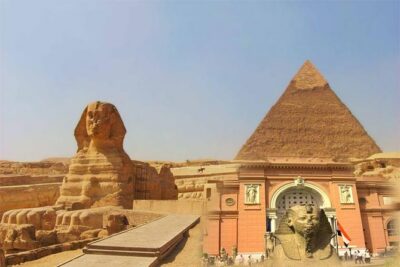
Private ViP all-inclusive Giza Pyramids,Sphinx,Inside Pyramid
Read our review →
VIP Meet and Greet Private Hotel Transfer from Cairo Airport
Read our review →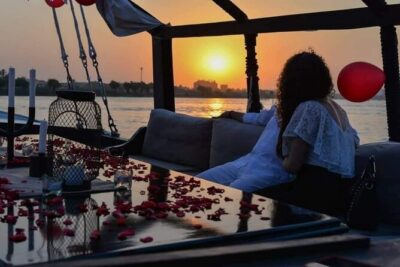
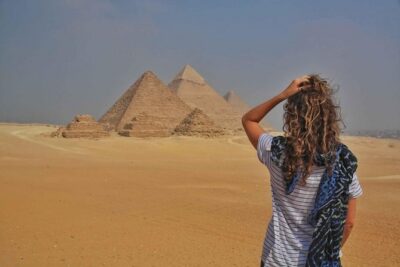
Best ViP Private Tour Giza Pyramids,Sphinx, inside Pyramids
Read our review →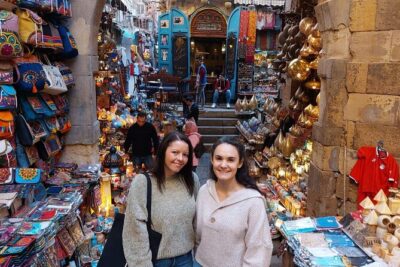
Cairo VIP Guided Tour to Khan El-Khalili Market with Lunch
Read our review →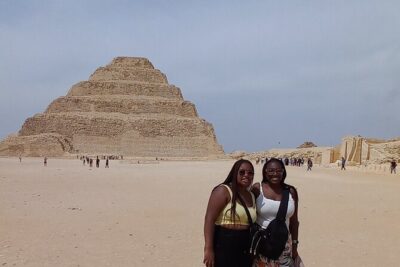
VIP Giza Pyramids, Sphinx, Lunch,Camel Ride & inside 3rd pyramid
Read our review →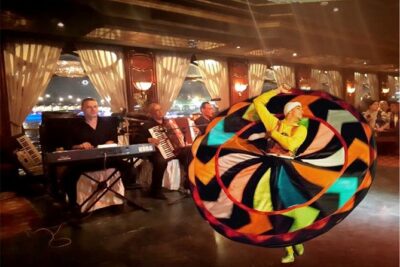
ViP Private Effective Nile River Dinner Cruise in Cairo
Read our review →Browse the lists this tour appears in